Ceramic Valve Solutions for Sodium Bicarbonate Slurry
Reliable flow control and isolation for crystallizing NaHCO₃ slurry, ammoniated brine and chloride-rich mother liquor in soda ash plants
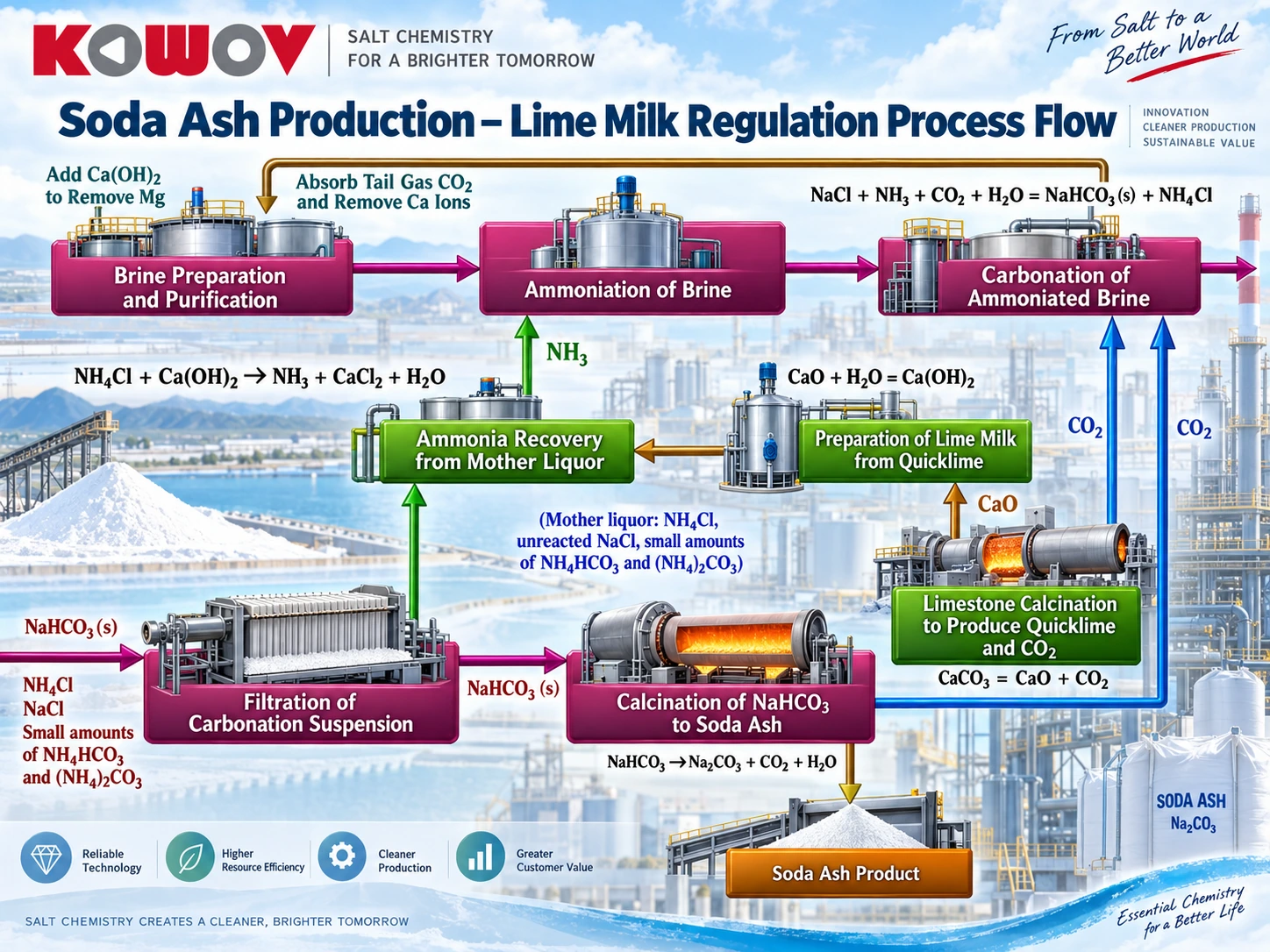
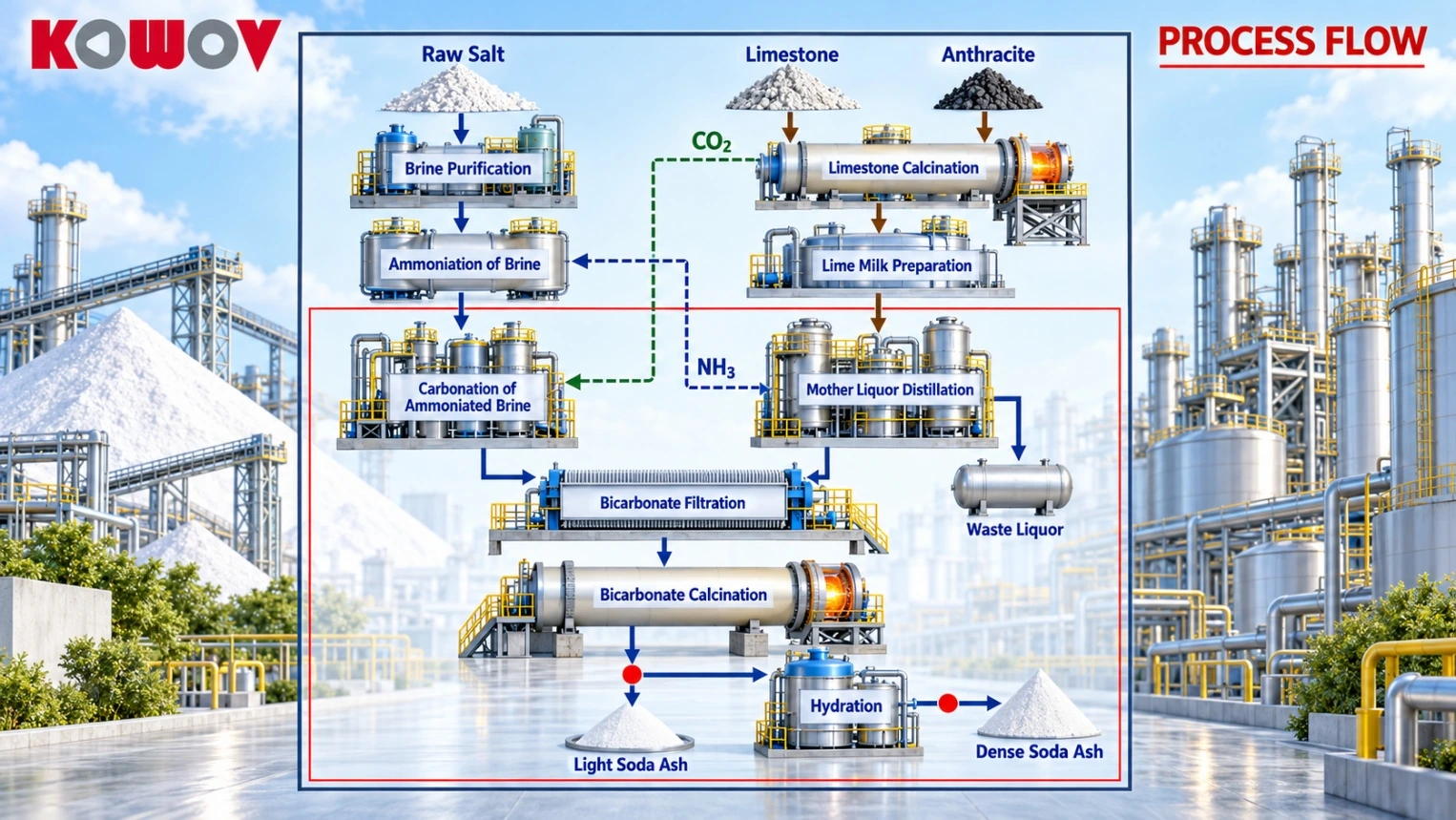
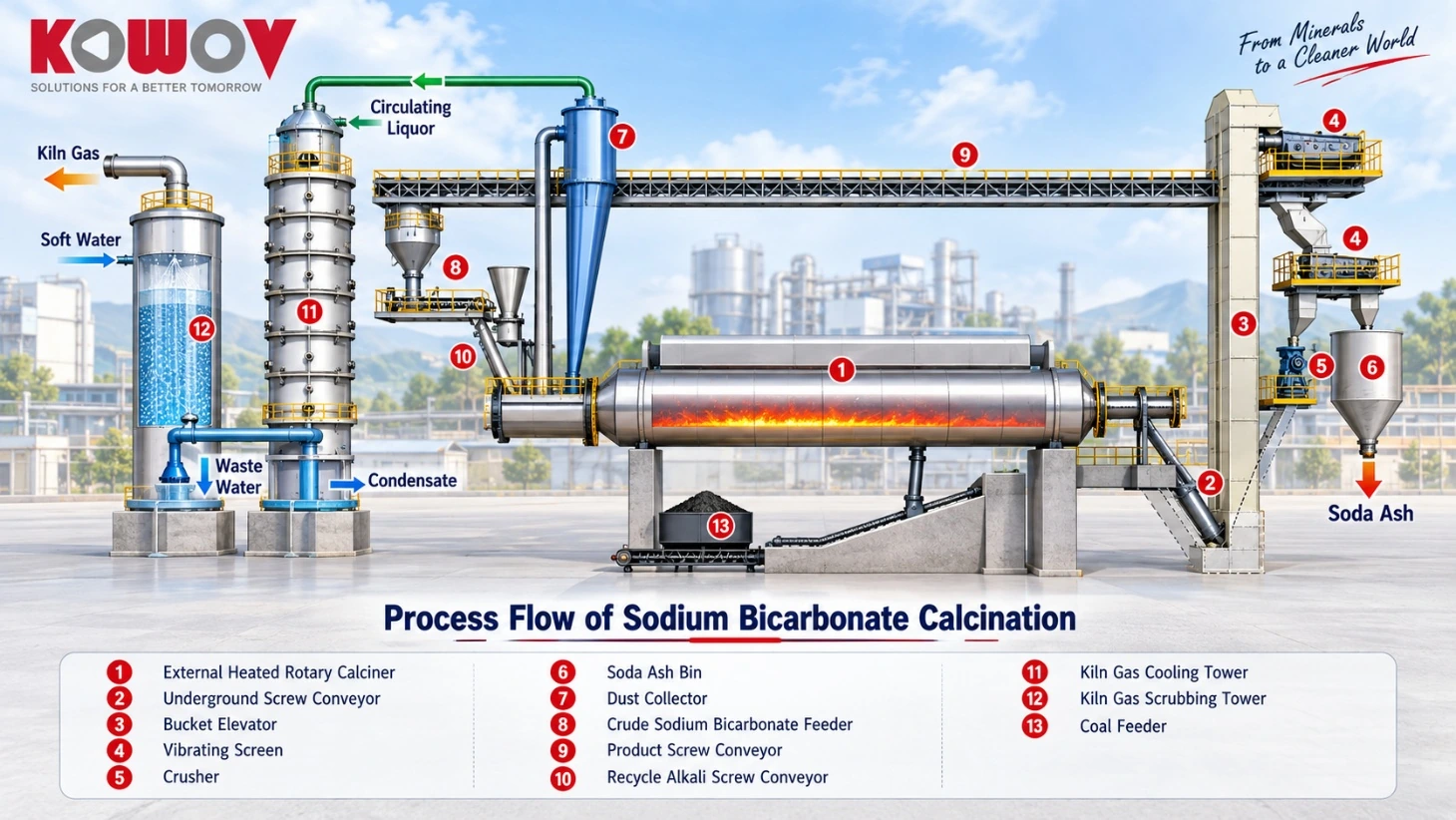
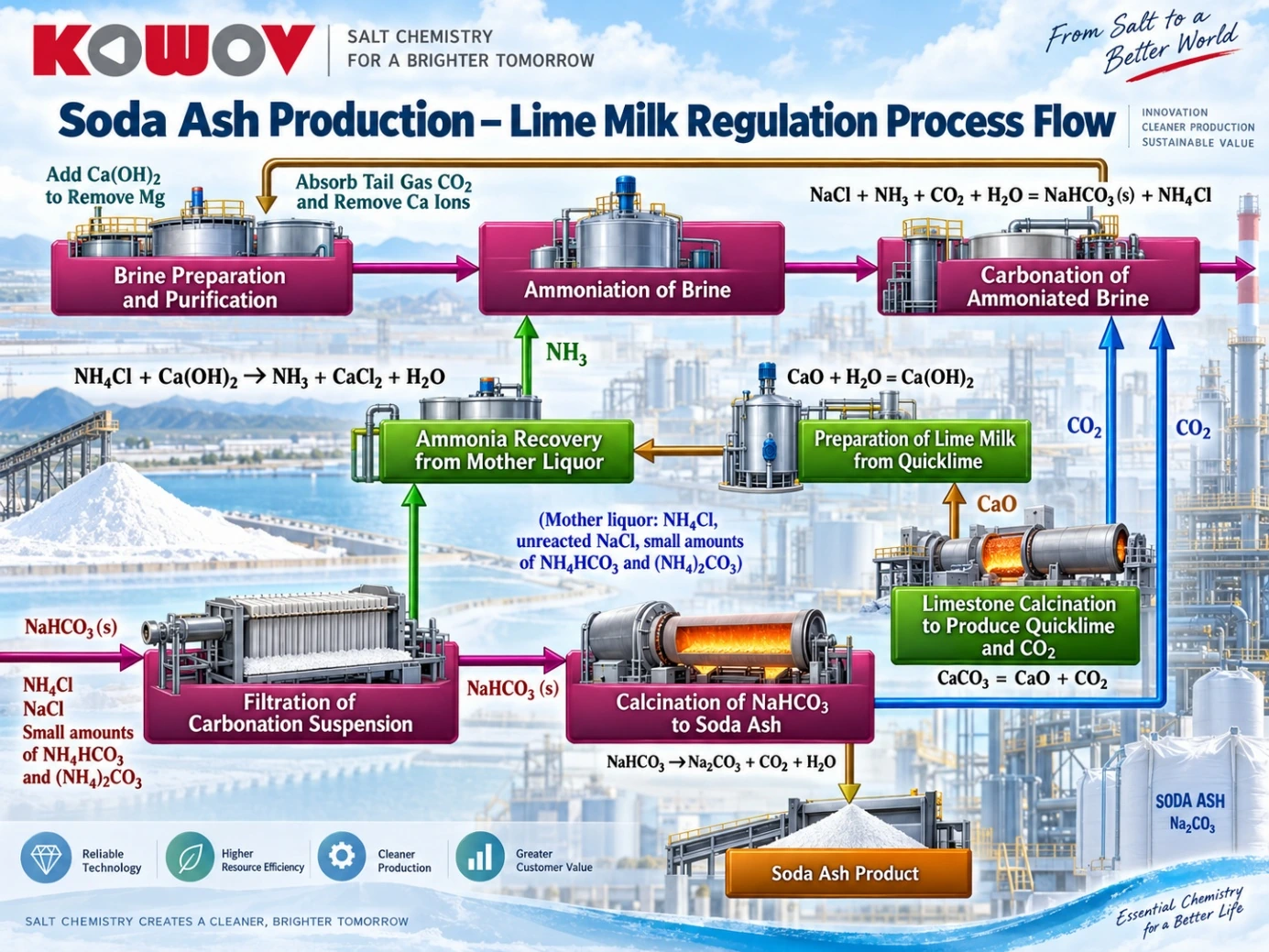
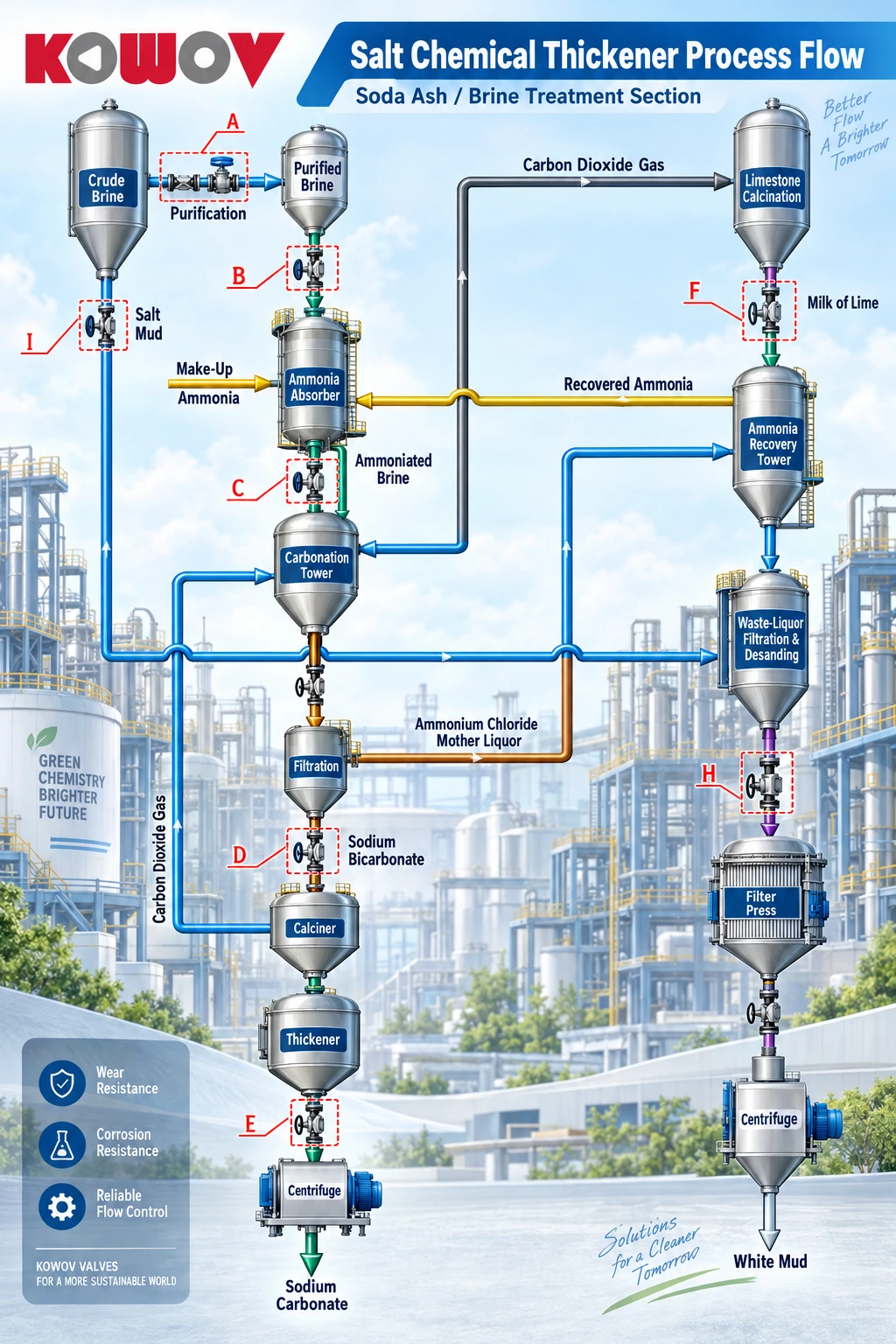
In the production of soda ash by the ammonia-soda or combined-soda process, also known as the Hou process, sodium bicarbonate is a key intermediate product with the chemical formula NaHCO₃
Operating Conditions
In the carbonation section of the soda ash plant, ammoniated brine absorbs carbon dioxide in the carbonation tower to produce a heavy soda ash suspension. Because the medium continuously precipitates solid particles during the process, conventional stainless-steel or fluoropolymer-lined valves are highly susceptible to sealing-surface abrasion, corrosion, and crystallization-induced seizure inside the valve cavity
| Parameter | Value | Classification | Specification / Characteristics |
|---|---|---|---|
| Medium | Lime slurry / salt sludge | Liquid-solid two-phase | Corrosive and abrasive |
| Pressure range | 6-16 bar | Pressure class | Class 150 / PN16 |
| Differential pressure | ≤6 bar | Nominal diameter | DN25-DN200 |
| Temperature range | <100°C | - | No thermal shock |
Medium Details
| Medium Property | Details |
|---|---|
| Chemical composition | Magnesium hydroxide, calcium carbonate, barium sulfate, and other precipitates |
| Corrosive components | High concentration of chloride ions (Cl⁻) |
| Corrosiveness (pH) | pH 8-10 |
| Solids content | 15%-20% |
| Particle size | 20-80 μm |
| Particle hardness | Approximately Mohs 2.5-3 |
Special Operating Conditions
Alkaline Corrosion
Chemical corrosion: The heavy soda ash suspension contains not only NaHCO₃, but also unreacted NaCl, NH₄Cl, (NH₄)₂CO₃, NH₄HCO₃, and other salts. This complex salt solution creates a continuously corrosive chemical environment for metallic equipment
Mechanical Abrasion
Heavy soda ash suspension is a liquid-solid two-phase flow. As it passes through pipes and valves, continuously precipitated solid particles strongly erode metal surfaces. This mechanical abrasion removes protective films, exposing fresh metal to the corrosive medium and creating a vicious cycle of corrosion and wear that accelerates equipment damage
Acid Corrosion
Ammoniated brine contains a high concentration of chloride ions. Their strong penetration destroys passive films on metal surfaces, causing severe localized corrosion such as pitting and crevice corrosion
Lime-Milk Crystallization and Scaling
Lime-milk scaling is not simple physical adhesion, but a combined process of chemical conversion (carbonation), physical expansion (precipitation from supersaturation), and composite deposition. These deposits have high hardness, strong adhesion, and significant damage potential to protective linings, making them a major cause of unplanned shutdowns, equipment wear, and coating failure in chemical and environmental-protection systems
Equipment Hazards
Crystallization, sticking, and blockage: Crystals readily precipitate inside valves. Improper valve selection, especially flow passages with dead zones, allows rapid buildup, causing valve seizure, carbonation-tower level or pressure imbalance, and emergency shutdown of the entire production line
Erosive wear and internal leakage: Solid particles in the medium cause severe cutting wear on valve sealing surfaces. Once sealing fails, internal leakage can reduce system pressure, lower heavy soda ash conversion, disrupt process parameters, and trigger safety interlock shutdowns
Keywords: Chlor-alkali chemicals, soda ash industry, heavy soda ash calcination, carbonation reaction, coarse heavy-soda-ash feeder, ammonia-distillation section
Process Pain Points or Key Opportunities
Existing Valve Materials and Designs
Common onsite valves include PTFE-lined butterfly valves, metal hard-seated valves, and ceramic hemispherical valves
Problems with Existing Valves
The medium is highly corrosive and abrasive, with an operating temperature range of −19°C to 180°C. Certain locations require Leakage Class VI shutoff
Fluoropolymer-lined valves are traditionally used to address corrosion, but they have poor erosion resistance. When lime milk reacts with carbon dioxide in the air, calcium carbonate deposits are formed. These crystals, primarily calcite, have considerable mechanical strength (Mohs hardness approximately 3) and very strong adhesion, which can quickly seize valves and cause seal failure
Replacement Interval and Service Life
The typical replacement interval is only 2-3 months; under severe operating conditions, the usable life may be reduced to approximately 3-4 months
Losses Caused by Unplanned Shutdowns for Maintenance
In heavy soda ash (sodium bicarbonate) production, heavy soda ash suspension and ammoniated brine are two core process media. Their chemical corrosivity is not caused by a single strong acid or alkali, but results from the combined effects of complex chemical composition, physical state, and operating conditions
Soda ash production is a capital-intensive continuous-process industry. An unplanned shutdown can cause a sharp decline in current-period output and consume large amounts of steam and electricity during system reheating, repressurization, and commissioning, resulting in substantial economic losses
Case Study
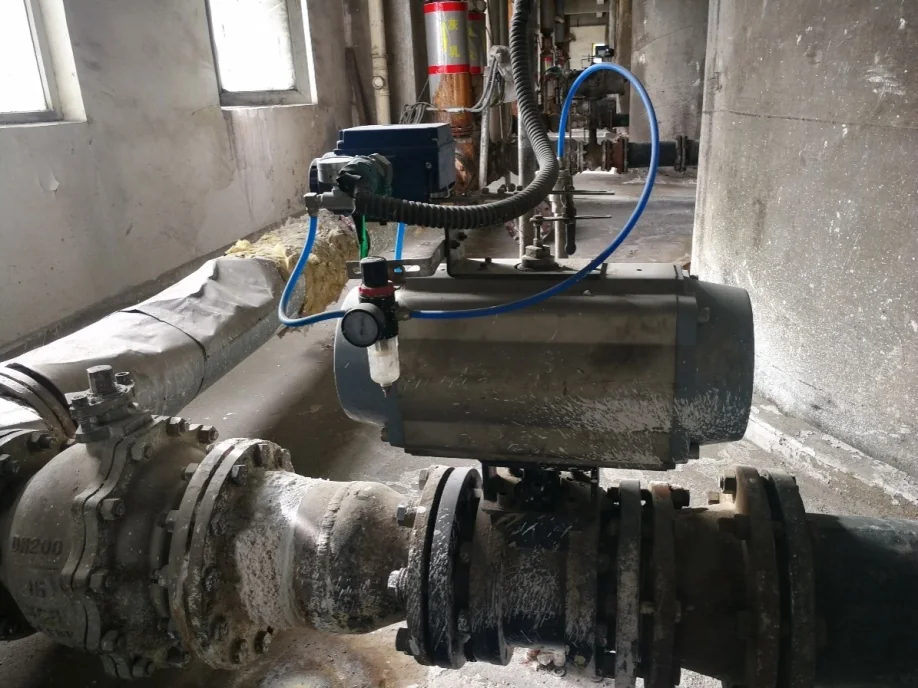
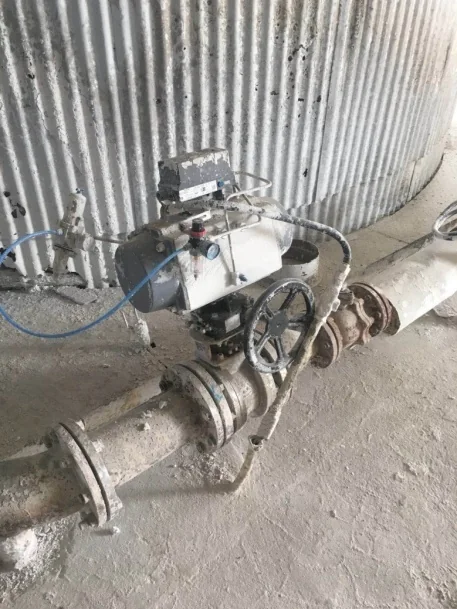
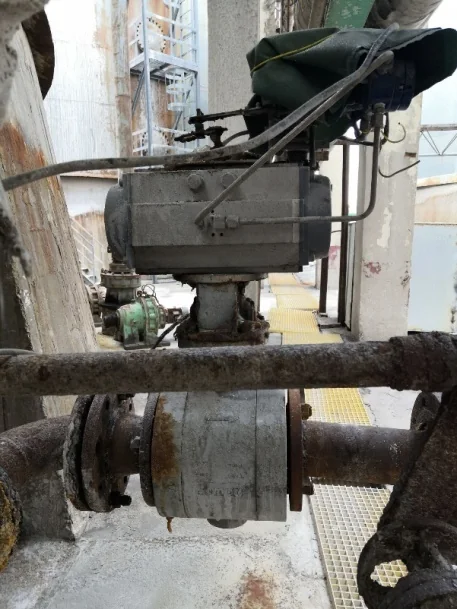
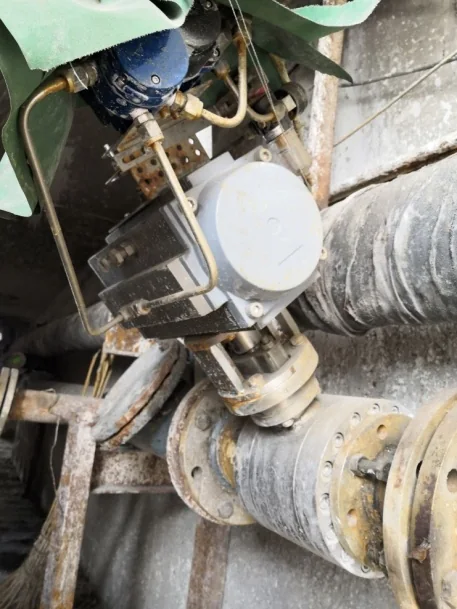
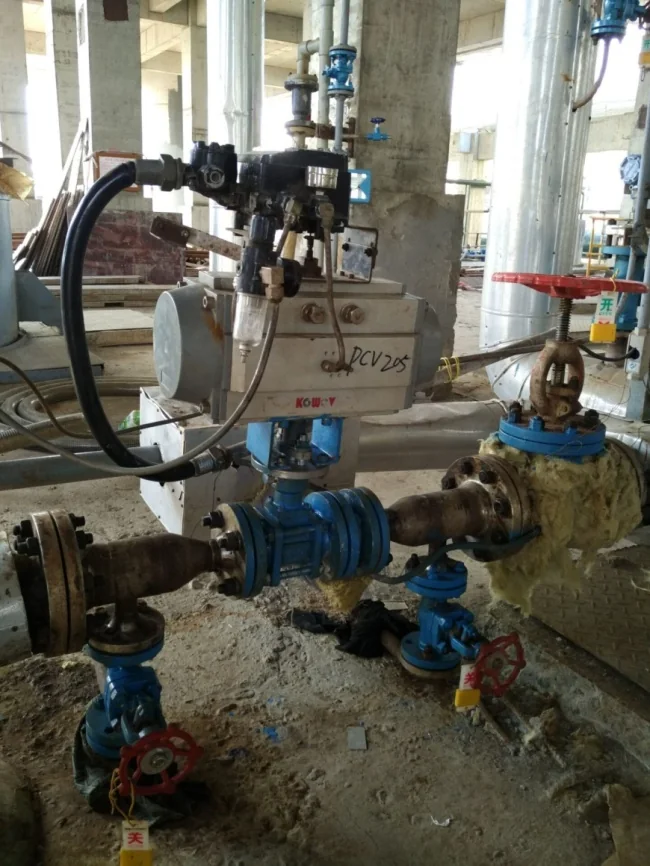
Sodium Bicarbonate Slurry: site photographs
End Users
- Tangshan Sanyou Chemical Industries Co., Ltd., China, since 2017
- Sinochem Qinghai Kunlun Soda Co., Ltd., China, since 2017
- Qinghai Salt Lake Industry Group Co., Ltd., China, since 2018
In soda ash production, the process is long and the medium has a complex composition, containing chlorides, high chloride concentrations, and calcium-magnesium solid particles. Conventional metal valves, such as stainless-steel and fluoropolymer/rubber-lined valves, often cannot provide both corrosion and wear resistance, resulting in very short service life and frequent leakage
At a heavy soda ash workshop, conventional stainless-steel and lined valves repeatedly suffered from sealing-surface corrosion, abrasive wear, and crystallization-induced seizure inside the valve cavity. Their service life was typically no more than six months. After replacement with ceramic ball valves, performance improved significantly, enabling nearly four years of continuous and stable operation and eliminating the need for frequent valve replacement
Minimum Service Life
- On/off valves: ≥3 years
- Control valves: ≥2 years
Why Choose Ceramic Valves?
Superior Wear Resistance
Structural ceramics achieve a Rockwell hardness of over 87. Their wear resistance is approximately 266 times that of manganese steel and 172 times that of high-chromium cast iron, far exceeding that of conventional metals and PTFE-lined valves. They withstand long-term erosion and abrasion, preventing internal leakage and reducing replacement frequency
Excellent Corrosion Resistance
Structural ceramics are inorganic, non-metallic materials with extremely high chemical inertness. They resist corrosion from a wide range of acids, alkalis, and salts, including most acidic and alkaline media found in the salt-chemical industry
Smooth Surface & Low Adhesion
Structural ceramics provide self-lubricating and self-cleaning surface properties, effectively preventing material adhesion and buildup. With hardness of up to HRA 90, they withstand continuous erosion from powder media and ensure precise control of feed flow
Superior Process Quality
The high mechanical strength and smooth ceramic surface reduce crystal adhesion, blockage, and wear caused by ammonium and sodium salts, while making flushing more effective. Highly flat sealing surfaces allow the valve plug and seat to maintain uniform contact, preventing internal leakage and cross-contamination. Reliable sealing is maintained even after multiple production batches, improving the quality consistency of intermediate products
Conclusion: Ceramic ball valves and ceramic C-port valves help ensure safe, stable, long-cycle operation in the salt-chemical industry, significantly reducing shutdowns and maintenance
Commonly Used Products
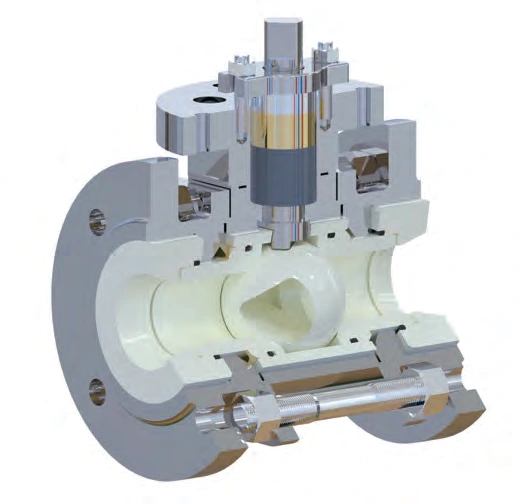
FCCV1
Standard Ceramic Ball Valve
A standard ceramic ball valve featuring a proven, versatile design. It is suitable for both on/off and modulating service and can handle operating temperatures up to 180°C and pressures up to 5.0 MPa
Its ceramic-to-ceramic sealing structure delivers excellent sealing performance, with particularly reliable shut-off in applications containing solid particles
- Size Range: DN15-DN300 (½″-10″)
- Leakage Class: Class IV or higher
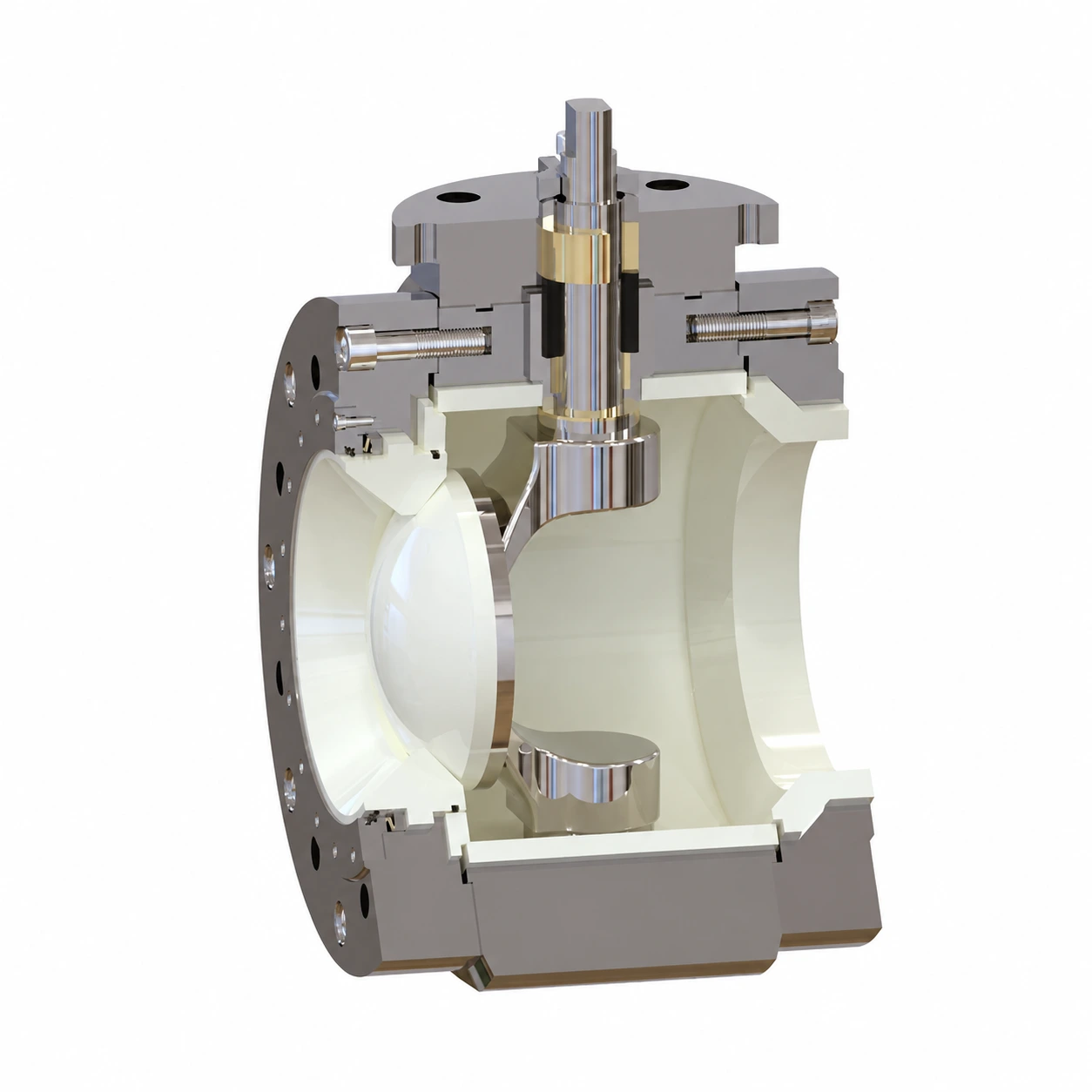
FCRV
Ceramic C-Port Rotary Valve
This valve features a patented C-port design. The ceramic ball segment consists of a C-shaped support and a ceramic spherical crown joined through a mechanical interlocking connection. The spherical crown is manufactured as an integral ceramic component, protecting the C-shaped support from direct erosion by the medium
The valve incorporates an eccentric design. During opening and closing, the ceramic spherical crown remains in close contact with the seat, scraping away adhesive deposits from the sealing surfaces and ensuring reliable sealing performance
It is particularly suitable for media prone to adhesion, scaling, crystallization, high solids content, and sedimentation. Its cavity-free flow path prevents material accumulation inside the valve body
Size Range: DN50-DN400 (2″-16″)
View FCRV
FCCV6
Single-Seat Ceramic Ball Valve
This cavity-free ceramic ball valve is designed for highly adhesive, crystallizing, scaling, and mineral-slurry applications
Its robust construction provides reliable, long-term performance and prevents material from entering and accumulating inside the valve cavity. Each opening and closing cycle allows the ceramic ball to scrape deposits from the sealing surfaces, helping maintain cleanliness and reliable shut-off
Size Range: DN15-DN250 (½″-10″)
View FCCV6Contact Us
Talk to our team about your sodium bicarbonate slurry application
Discuss your application