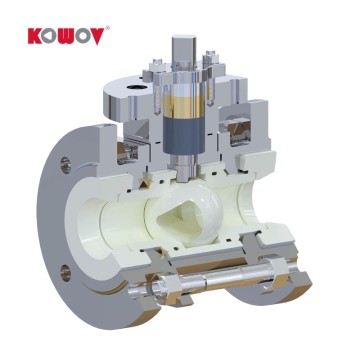
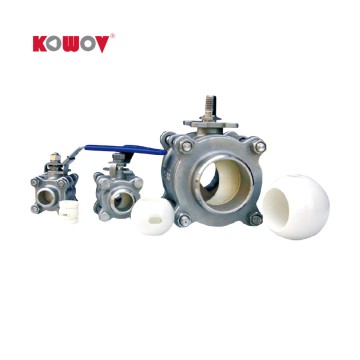
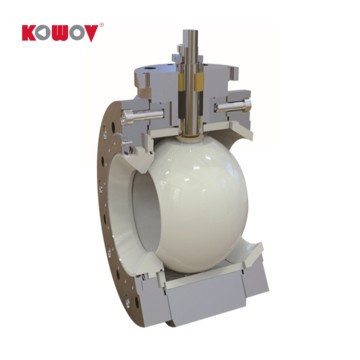
FCCV4 Ceramic Ball Valve

KOWOV manufactures the FCCV4 anti-deflection ceramic ball valve for high-differential-pressure regulation in coal-chemical, soda ash, mining and cement plants. It is configured for flow regulation and first-stage pressure reduction, with DIN, ANSI, API or HG flange connections
- Size range
- DN25-250
- Pressure rating
- PN10-160 / Class 150-900
- Temperature range
- -40 to 456 °C
Product overview
Design and construction
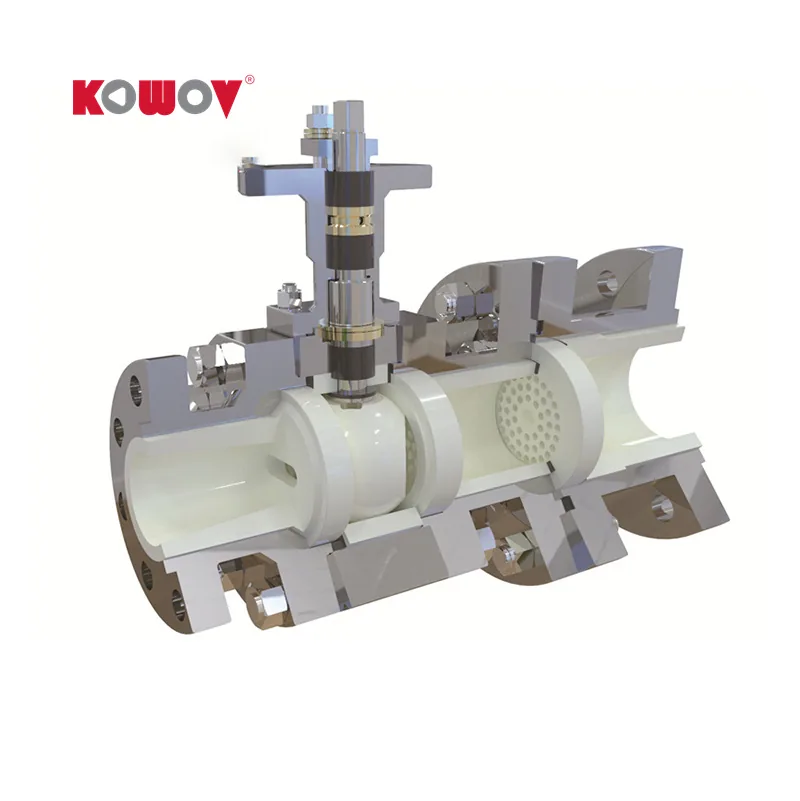
Anti-bias flow design: reduces direct erosion at small openings and is intended to stabilize throttling
Vibration reduction: minimizes the impact of water hammer, particularly near elbows or rapid flow changes, thereby enhancing system safety
Noise reduction: available in single or multi-stage designs to reduce noise levels and comply with strict environmental and workplace standards
Pressure reduction: customizable multi-stage pressure reduction structure to meet on-site working requirements, preventing cavitation and scouring damage
Applications
Coal Chemical Industry: Quench water flow regulation; black ash water flow control; multistage pressure-reducing valves
Salt Chemical Industry: Flow regulation of ash slurry in soda ash production
Mining & Metallurgy: Metal slurries, waste residues
Cement Production: Abrasive slurry handling and flow control
Technical data
| Item | Y-ZrO Y-TZP | Mg-ZrO₂ M-PSZ | 90 Al₂O₃ | 95 Al₂O₃ | 99 Al₂O₃ | Si₃N₄ | SiC | Common ceramics | Carbide alloy | 45# Steel |
|
Density g/cm³ |
6.0~6.05 | 5.72~5.74 | 3.45~3.55 | 3.6~3.75 | 3.9~3.95 | 3.2~3.33 | 3.15~3.25 | 3.0~3.5 | 14~18 | 7.8 |
|
Hardness HRA/C |
87 | 85 | 90 | 90 | 92 | 92 | 94 | 50~60 | 70 | 36 |
|
Flexural Strength MPa |
1150 | 900 | 350 | 370 | 450 | 1200 | 470 | 20~50 | 2000 | 804 |
|
Fracture Toughness (KIC) MPa√m |
10~12 | 13~15 | 3.4 | 3.6 | 4.5 | 7 | 4 | -- | 20 | 101 |
|
Compressive Strength MPa |
2000 | 1800 | 1700 | 2000 | 2200 | 2800 | -- | -- | 4000 | 2000 |
|
Thermal Shock Resistance °C |
87 | 110 | -- | -- | 50 | 200 | 75 | -- | 500 | 500 |
|
Thermal Expansion Coefficient ×10⁻⁶/°C |
9.6 | 10 | 7.6 | 7.8 | 8.3 | 3.4 | 4 | -- | 7 | 12 |
|
Modulus of Elasticity GPa |
200 | 200 | 310 | 330 | 350 | 300 | 400 | -- | 600 | -- |
|
Crushing Load KN (Φ6mm) |
15 | 10 | 3.5 | 3.6 | 4 | 18 | 3.5 | -- | -- | -- |
|
Using Temperature °C |
<160 | <1000 | <1200 | <1250 | <1500 | <1500 | <1500 | -- | -- | <560 |
|
Water Absorption |
0 | 0 | 0.02% | 0.01% | 0.00% | 0 | 0.50% | 5~10% | -- | -- |
|
Corrosion Prevention |
Good | Good | Good | Good | Good | Good | Good | Flooey | Good | Flooey |
| Media | Temperature | ZrO₂ | 99.9% Al₂O₃ | SiC | Si₃N₄ | Graphite | PTFE | Fluororubber | SS304 | SS316 | HC |
| 20% HCL | 60°C | A | A | A | B | A | A | A | C | C | B |
| 20% HCL | 95°C | A | A | A | C | A | A | A | -- | -- | C |
| 90% H₂SO₄ | 60°C | A | A | A | A | A | A | A | C | C | B |
| 90% H₂SO₄ | 95°C | A | A | A | B | A | A | A | C | C | C |
| 60% H₃PO₄ | 60°C | A | A | A | C | A | A | A | C | C | A |
| 60% H₃PO₄ | 95°C | A | A | A | C | A | A | A | C | C | A |
| 10% HF | 60°C | C | B | A | A | A | A | A | C | C | B |
| 46% HF | 95°C | C | C | A | C | A | A | A | -- | -- | C |
| 60% HNO₃ | 60°C | A | A | A | C | B | A | A | A | A | C |
| 60% HNO₃ | 95°C | A | B | A | C | B | A | A | B | B | C |
| 30% NaOH | 60°C | A | B | A | B | A | A | A | A | A | A |
| 30% NaOH | 95°C | B | B | A | C | A | A | A | A | B | A |
| Core Specifications | O-type ball core | V60° ball core | V45° ball core | V30° ball core |
| DN15 | 10 | 7 | 4 | 3 |
| DN20 | 18.2 | 12 | 8 | 5 |
| DN25 | 29 | 18 | 12 | 8 |
| DN32 | 47 | 30 | 20 | 13 |
| DN40 | 73 | 46 | 31 | 21 |
| DN50 | 114 | 72 | 48 | 32 |
| DN65 | 181 | 115 | 76 | 51 |
| DN80 | 292 | 185 | 123 | 82 |
| DN100 | 456 | 289 | 192 | 128 |
| DN125 | 712 | 452 | 300 | 201 |
| DN150 | 1025 | 650 | 432 | 289 |
| DN200 | 1822 | 1156 | 769 | 514 |
Application reading
Technical resources
- Ceramic Valve Solutions for Black Water Flashing Systems
- Ceramic Valve Solutions for Coal Gasification
- Ceramic Valve Solutions for Pressure Relief and Venting
- Ceramic ball valve guide: construction, materials and selection
- Ceramic Ball Valves FCCV3 and FCCV4 Data Sheet (PDF)
- What determines the assembled valve temperature limit?
- All documents, drawings and certificates
Contact Us
Send the medium, temperature, pressure, nominal size, solids, actuation and current failure mode. The engineering team will review the duty before recommending a valve
Send an enquiry about FCCV4