Ceramic ball valves
How ceramic ball valves are built, which ceramics they use, where they work and how to specify one
On this page
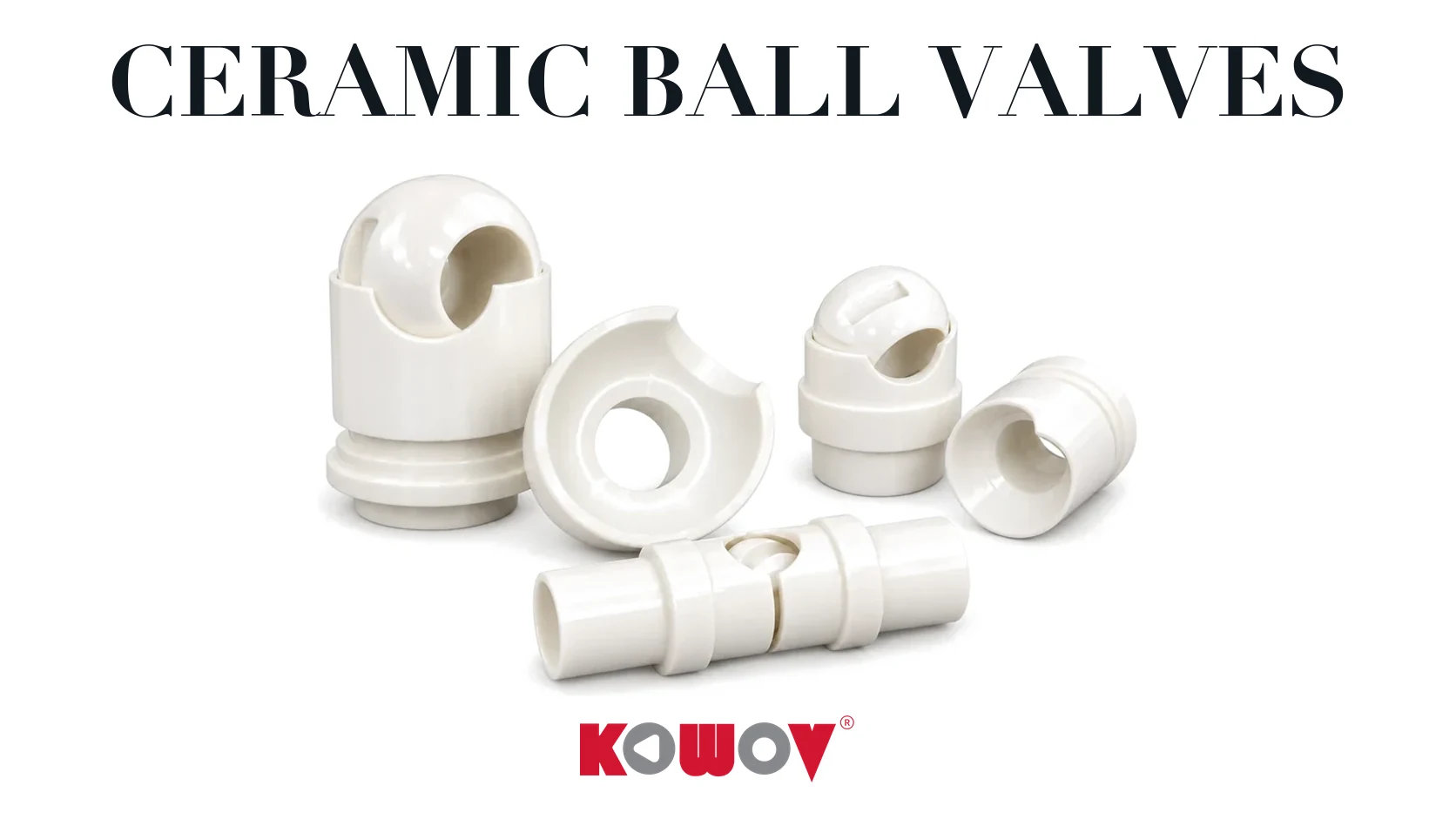
A ceramic ball valve is a quarter-turn valve whose ball, seats and flow-path liners are made of engineered ceramic, usually zirconia or alumina, instead of metal or rubber. The ceramic parts resist abrasion by solid particles and attack by acids, alkalis and chlorides, so the valve keeps sealing in slurry, gas-solid and corrosive service where metal and lined valves wear out quickly
Industrial ceramic valves are different from the ceramic disc cartridges used in household taps. This page covers valves for process plants: mining and mineral processing, hydrometallurgy, coal gasification, flue gas desulfurization, titanium dioxide, polysilicon and other chemical duties
KOWOV, the ceramic-valve brand of Yantai KingWay Science & Technology Co., Ltd., designs and builds ceramic ball valves in Yantai, China. The range below covers on-off and control duties from DN15 upward, from ambient temperature to high-temperature, high-pressure service
Which ceramic ball valve fits your duty?
| Model | Design | Typical duty | Published limits |
|---|---|---|---|
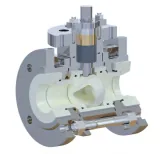 FCCV1 standard FCCV1 standard | Bidirectional floating ball, scraper-type seats, ceramic flange face | On-off and regulating service in corrosive media with abrasive solids: FGD, lime and gypsum slurry, mineral slurry | Below 180 °C and 5.0 MPa; differential pressure up to 2.0 MPa; DN15-DN250; sealing class IV or better |
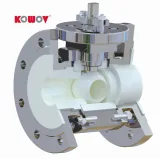 FCCV2 high-temperature FCCV2 high-temperature | Hard-sealed, with no graphite or PTFE sealing rings | Slurry and gas-solid service above the FCCV1 temperature range, with thermal shock | Above 180 °C, up to 456 °C; DN15-DN250; sealing class IV or better |
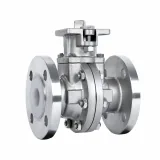 FCCV3 PTFE-lined FCCV3 PTFE-lined | PTFE- or PFA-lined body, PTFE seat, ceramic ball | Strongly corrosive, particle-free media | Up to 150 °C and 1.6 MPa |
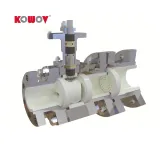 FCCV4 anti-deflection FCCV4 anti-deflection | Customizable multi-stage pressure reduction | Flow regulation and first-stage pressure reduction at high differential pressure, e.g. coal-chemical black water | DN25-DN250; up to Class 900; up to 456 °C |
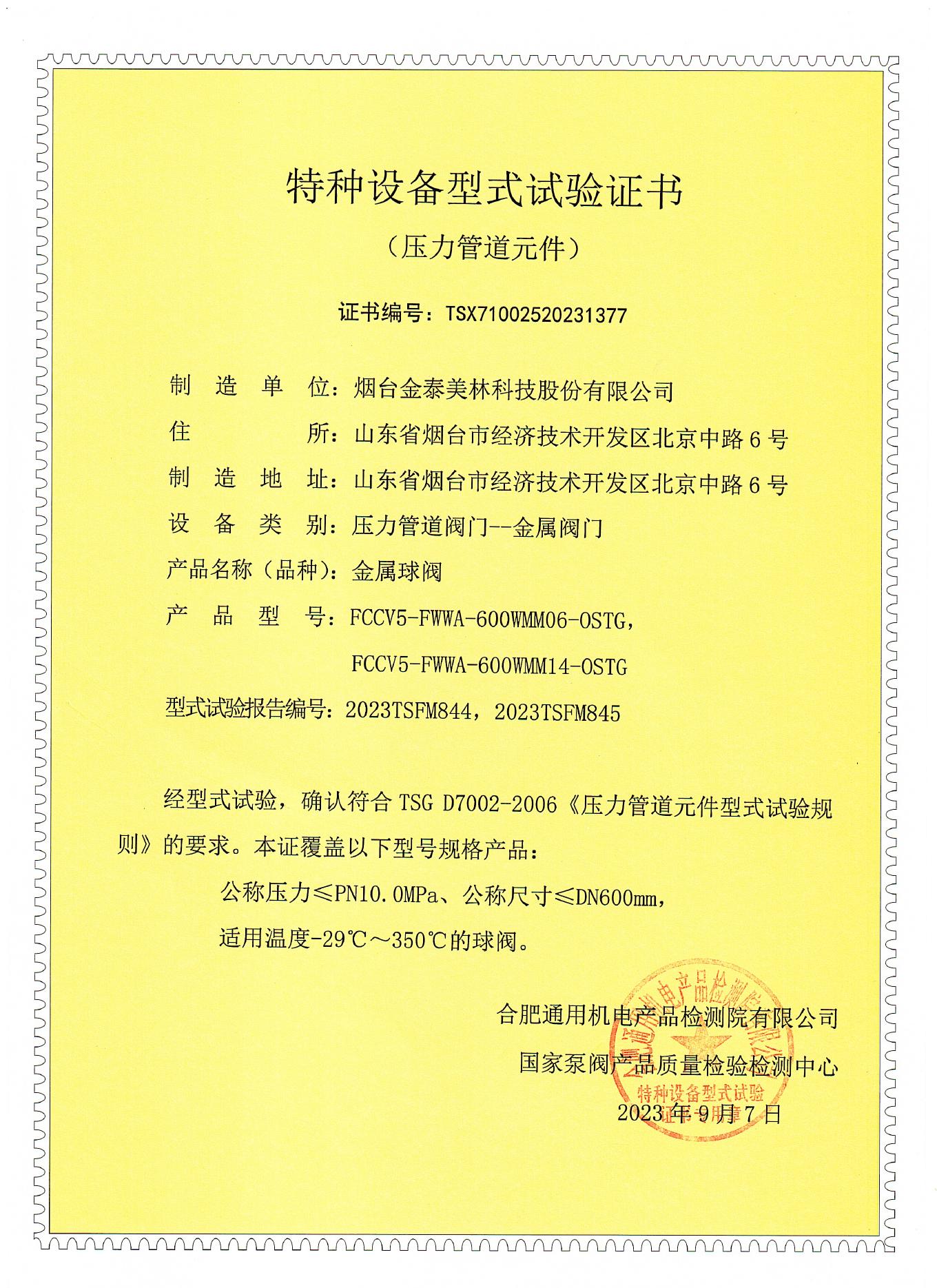
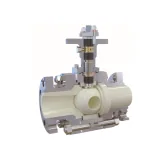 FCCV5 high-temperature, high-pressure FCCV5 high-temperature, high-pressure | Hard-sealed, scraper-type seat, dovetail-groove body seal | High temperature, high pressure and high differential pressure with fast-moving solids: lock hoppers, deslagging, pressure relief | DN25-DN300; up to 456 °C; up to Class 900 |
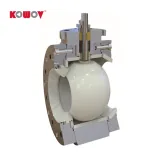 FCCV6 single-seat FCCV6 single-seat | Single scraper-type seat that cleans the sealing surface on every stroke | High-viscosity, crystallizing, scaling and abrasive slurries | Shutoff class ANSI Class VI (catalogue) |
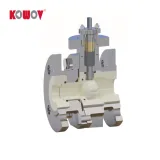 FCCV7 precision control FCCV7 precision control | Slotted ceramic ball | Low-flow regulation in corrosive, abrasive and particle-bearing media | See product page |
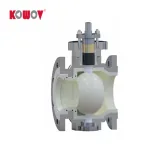 FCCV8 double lining FCCV8 double lining | Molded PTFE lining plus a ceramic-lined flow passage | Volatile, corrosive and hazardous media | See product page |
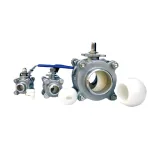 FCCV unlined hard ceramic FCCV unlined hard ceramic | Floating ball, ceramic-to-ceramic main seal | Corrosion that 304/316 stainless steel withstands, with softer particles and lighter erosion | DN15-DN250; -40 °C to 180 °C; up to Class 300 |
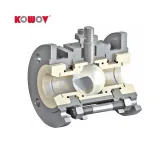 ELCV economical ELCV economical | Simpler construction, floating-ball and fixed-ball versions | Moderately demanding duties where ceramic sealing surfaces are needed at lower cost | PN10-PN50 / Class 150-300; -40 °C to 180 °C (catalogue) |
Final selection always depends on the medium, solids content, temperature, pressure, differential pressure and actuation duty. Ratings above are the maximums published for each series, not a guarantee for every size and configuration
How a ceramic ball valve is built
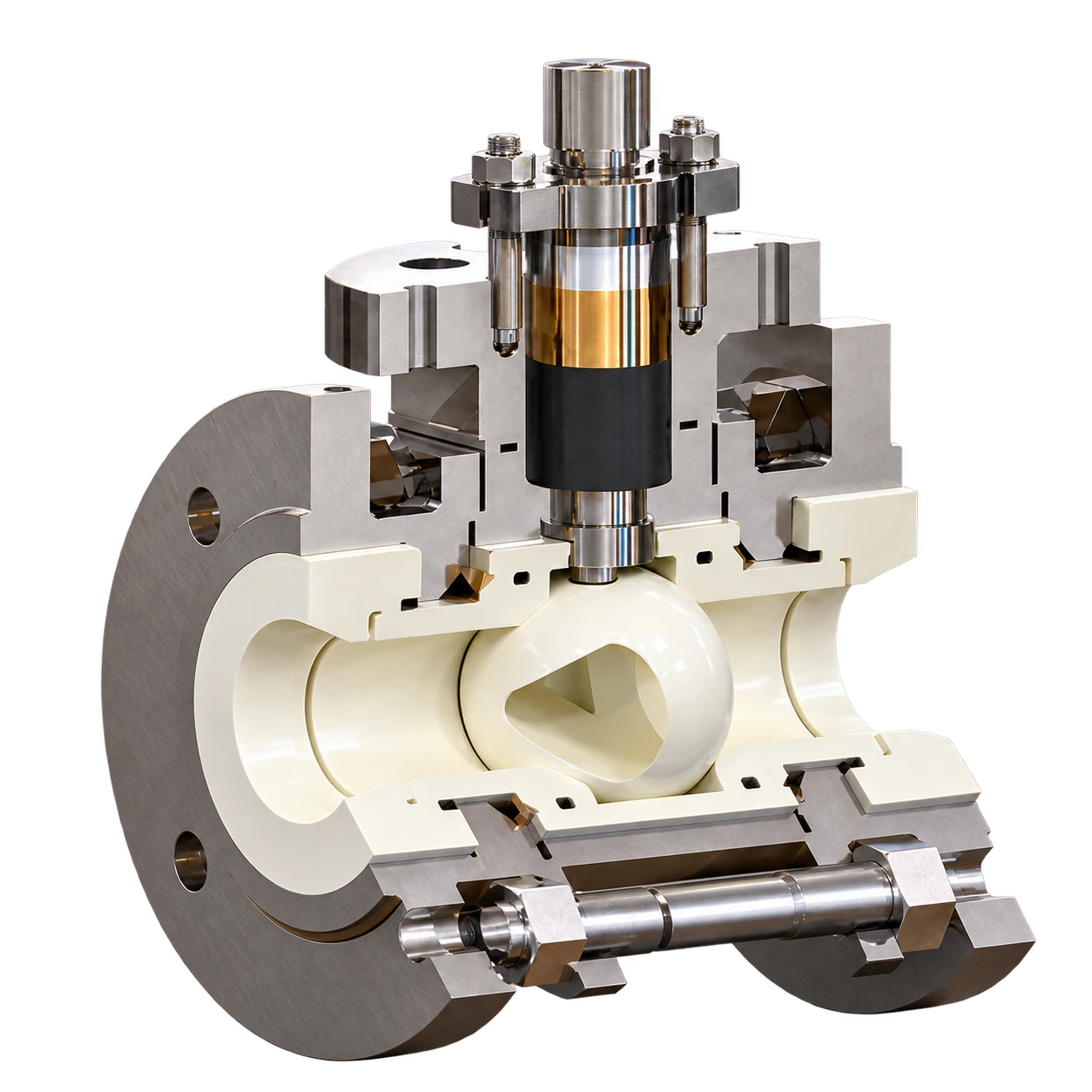
- Ceramic wetted path. The ball, the seats and the body liners are ceramic, so the medium does not touch metal in the flow path. On the FCCV1, a ceramic flange face also keeps the medium away from the metal flange
- Matched sealing surfaces. The ball and seats are ground together as a pair, which is what gives a ceramic-to-ceramic seal its tightness
- Scraper-type seats. A broad sealing surface and a scraper edge wipe particles and deposits off the ball as it turns
- Bidirectional sealing. The symmetrical FCCV1 body seals in both directions, so there is no flow-direction restriction
- Live-loaded packing. Springs keep the packing force constant as the packing wears
- Stem material to suit the medium. Options include 316/316L stainless steel, HC alloy, Monel and structural ceramics
Ceramic materials
Different ceramics suit different media and temperatures. The figures below are from the KOWOV catalogue
| Material | Hardness (HRA) | Flexural strength (MPa) | Fracture toughness (MPa·m½) | Use temperature (°C) |
|---|---|---|---|---|
| Zirconia, Y-TZP | 87 | 1150 | 10-12 | below 160 |
| Zirconia, Mg-PSZ | 85 | 900 | 13-15 | below 1000 |
| Alumina, 99% | 92 | 450 | 4.5 | below 1500 |
| Silicon nitride | 92 | 1200 | 7 | below 1500 |
- Zirconia is the toughest oxide ceramic. Under stress, some of its tetragonal grains transform to the monoclinic phase and expand slightly, which absorbs energy and closes cracks. That is why it is used for balls and seats that must seal tightly and resist particle impact. Its thermal expansion, about 10-12 µm/m·°C, is also close to that of steel, which suits it to shrink-fitting into a metal body
- Alumina is harder but much less tough, and is generally the lower-cost option. It expands less than steel, about 8-9 µm/m·°C
- Silicon nitride combines high strength with the best thermal-shock resistance of the four, so it is the choice where temperatures change sharply
Where ceramic ball valves are used
- Mining and mineral processing: mineral slurry handling, tailings paste backfill, hydrometallurgy
- Coal gasification: black water flashing, coal gasification, slag water recirculation
- Power and environment: flue gas desulfurization, fly ash handling, lime slurry control
- Chemicals and materials: titanium dioxide, polysilicon, sodium bicarbonate slurry
Field results
- FGD in power plants. KOWOV ceramic valves have been used in power plant FGD systems for more than two decades, with references supplied since 2003. In selected FGD applications, documented service life has reached up to eight years for on-off valves and up to five years for control valves
- Paste backfill. At one mine's backfill plant, a DN100 electrically actuated ceramic control ball valve commissioned in January 2011 has recorded a service life of at least eight years
- Steel pickling. Supplied to Shagang since 2009 and Baosteel since 2011, and to steel plants in Vietnam, India and Turkey. On-off valves have reached 10 years and control valves 5 years in service
Service life depends on the medium, flow velocity, pressure drop, solids content, valve design and operating frequency
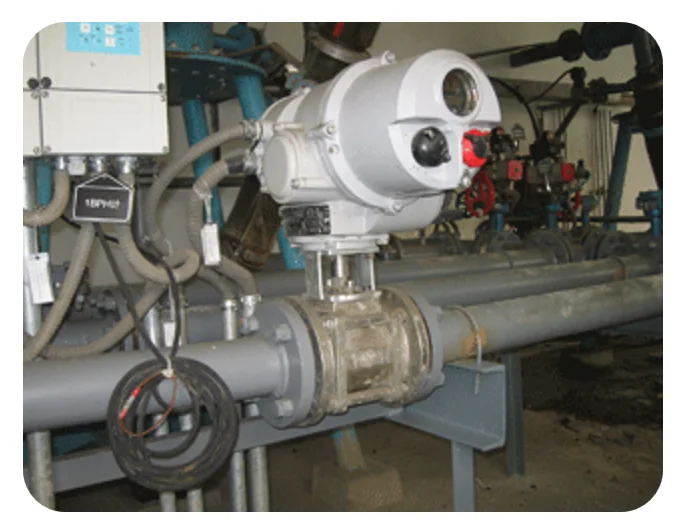
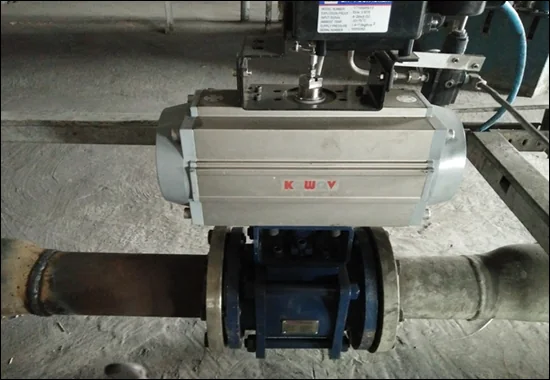
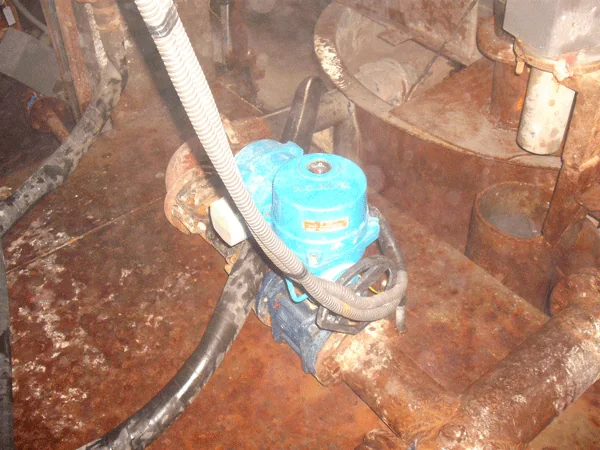
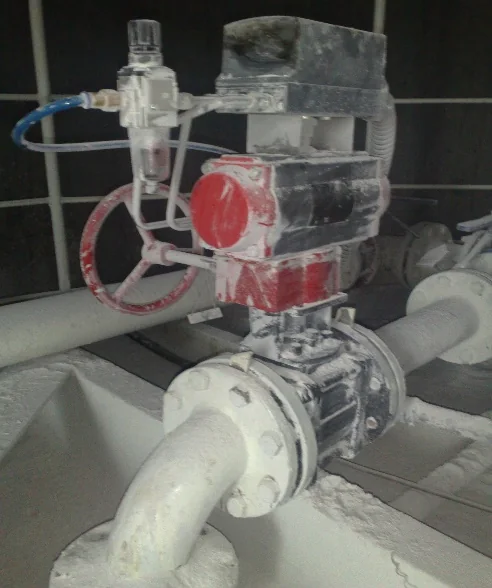
Read the applications: flue gas desulfurization, black water flashing, paste backfill, pyrometallurgy and steel pickling
Standards and quality
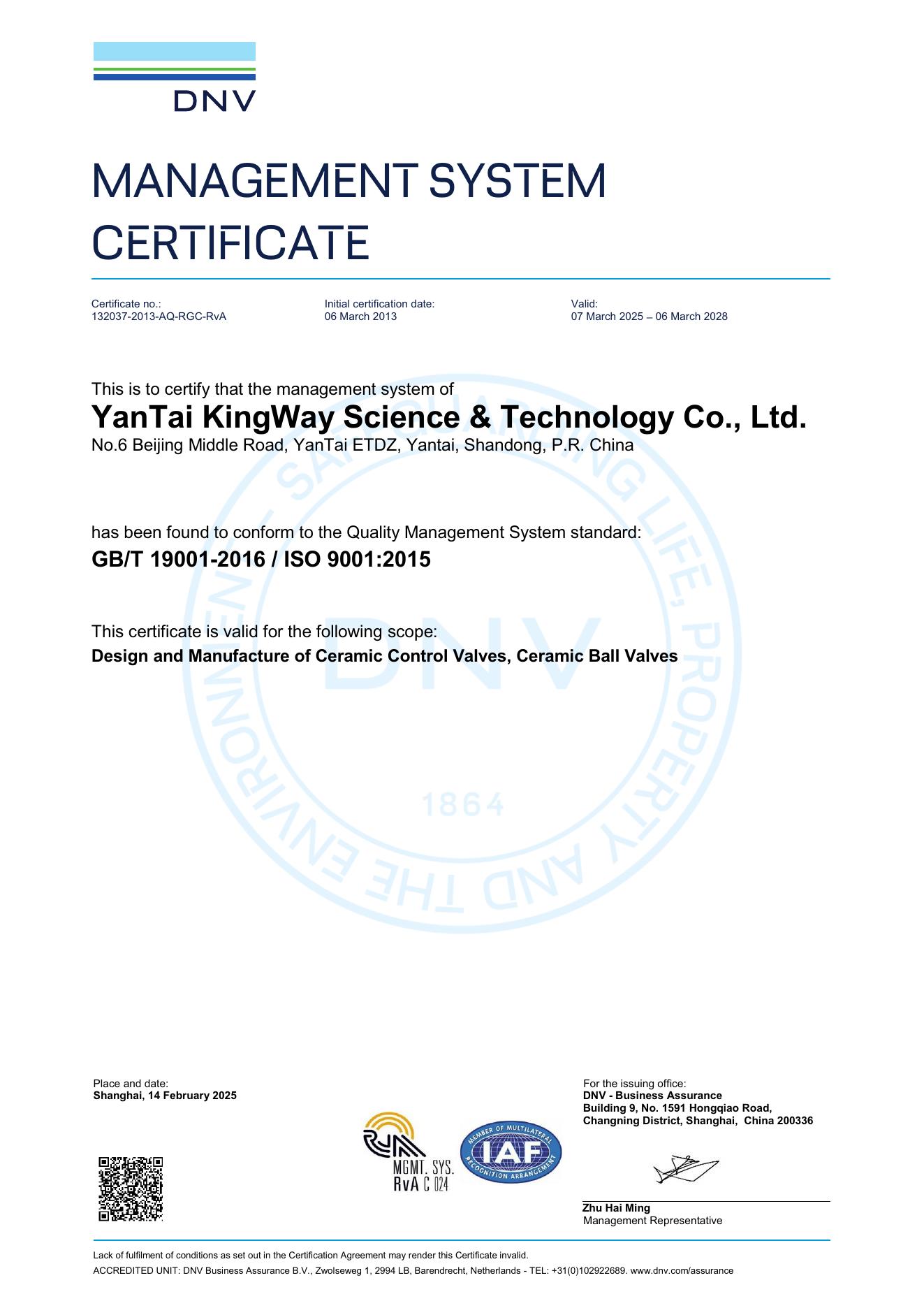
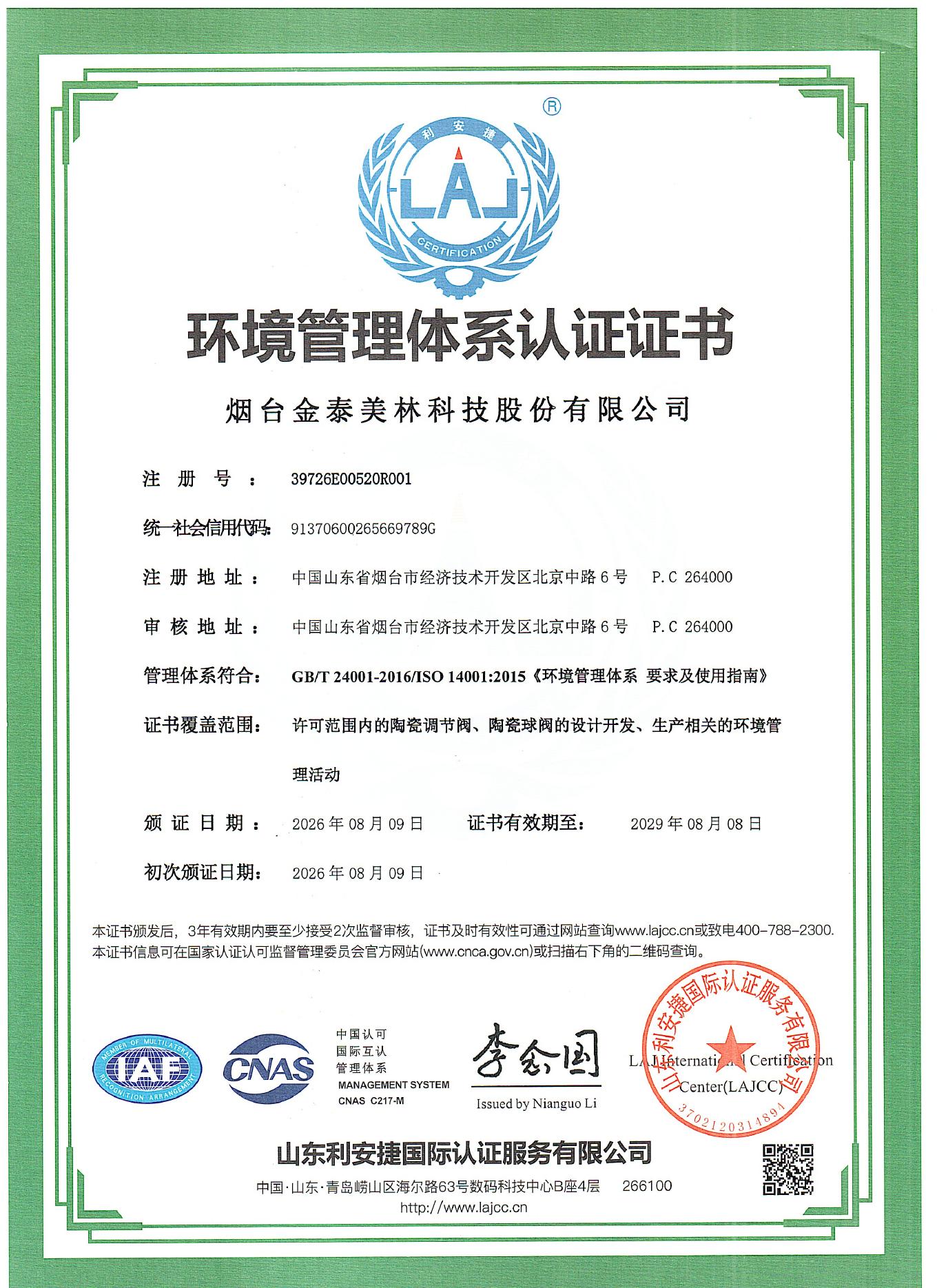
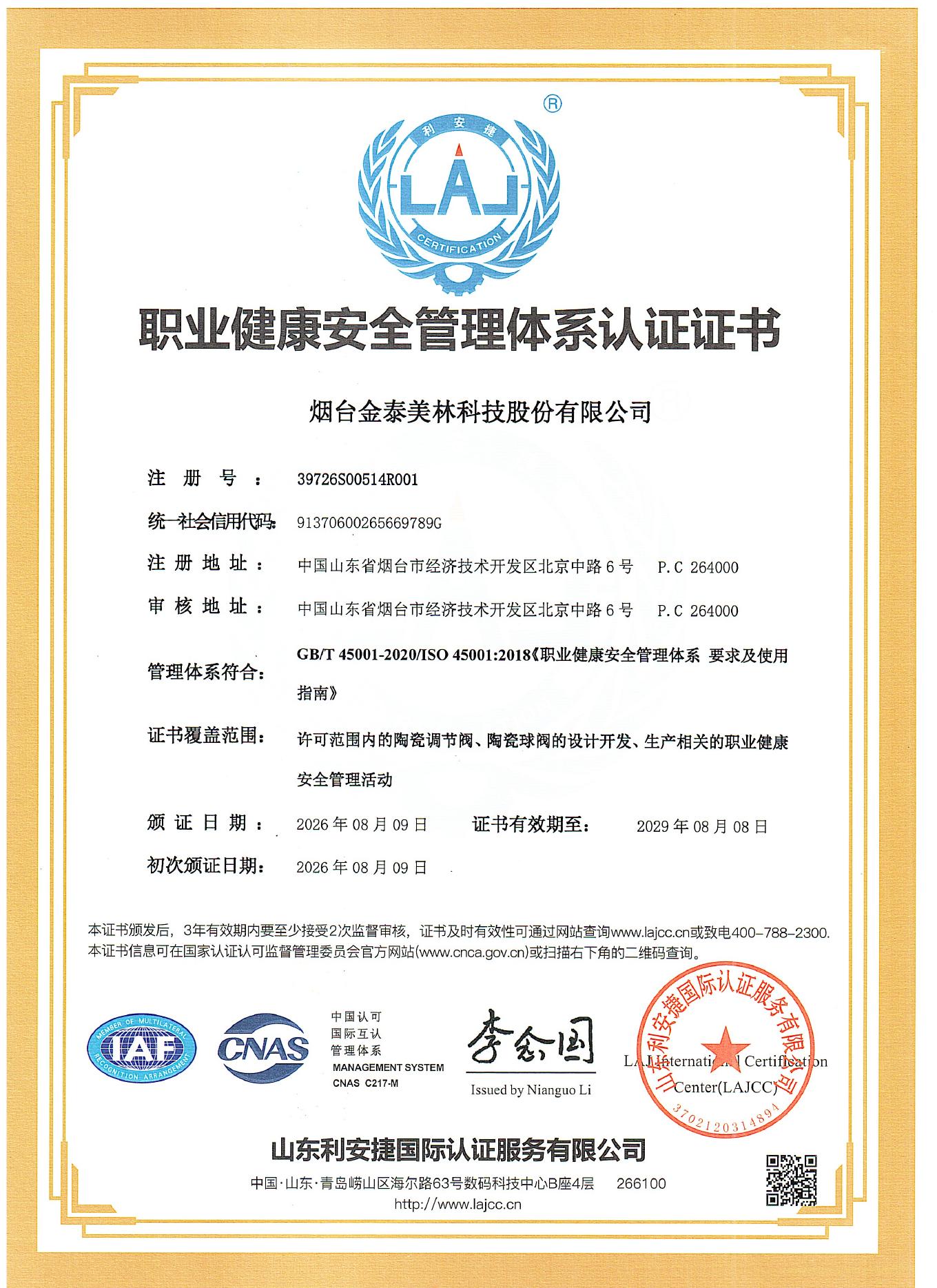
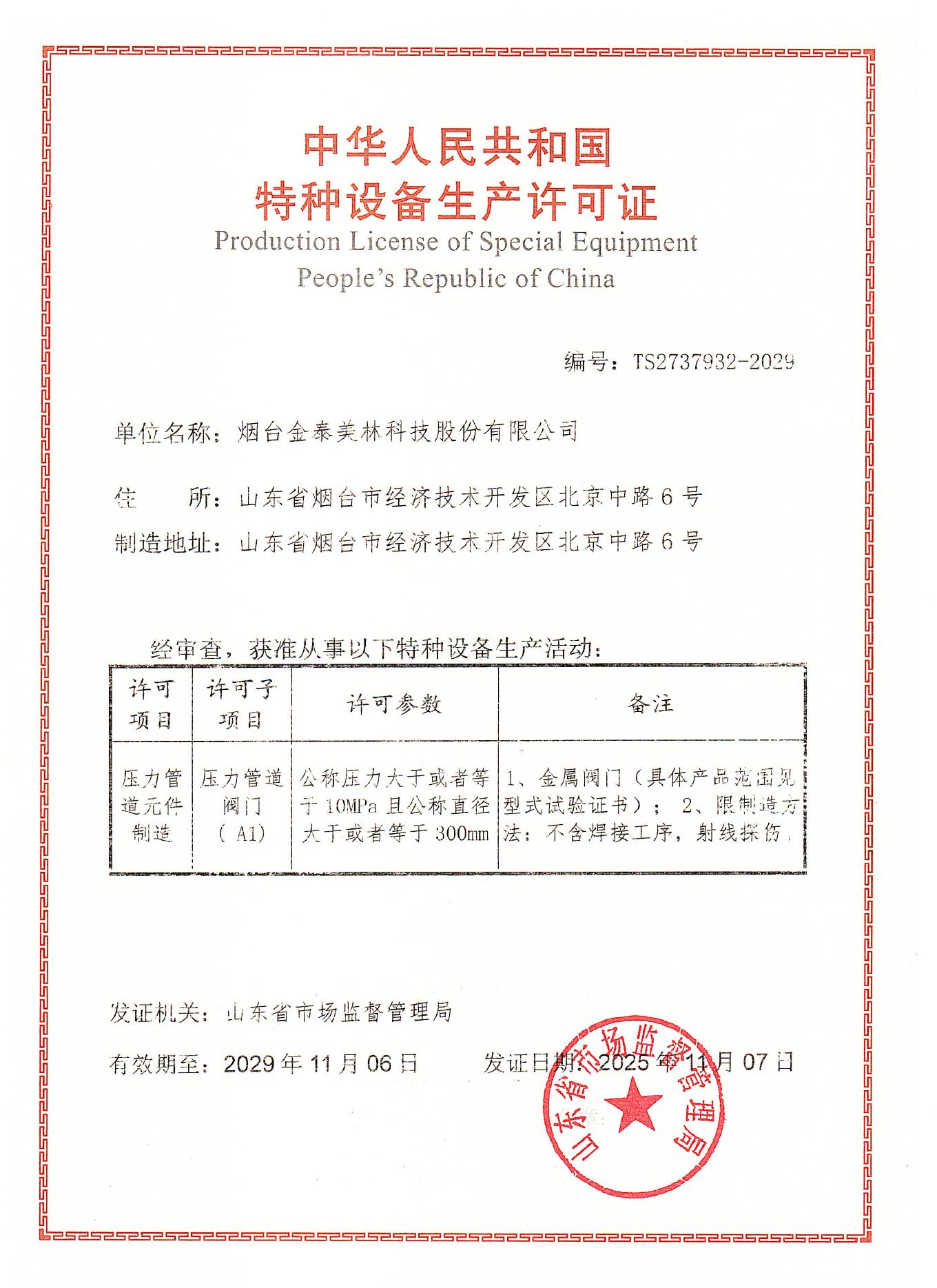
The Chinese Mechanical Engineering Society's notice for T/CMES 20023-2025, Ceramic Ball Valves: Technical Specifications and Quality Grading lists Yantai Jintai Meilin, the company behind KOWOV, among the organizations that jointly developed it. Quality, environmental and safety management certificates, the special equipment production licence and the FCCV type-test certificate are on Qualifications
When a ceramic ball valve is not the right choice
- Outside the published ratings. For example, the PTFE-lined FCCV3 is limited to 150 °C. For hotter duties, the hard-sealed FCCV2 or FCCV5 is the relevant design
- Severe mechanical impact or pipe stress. Ceramics are very hard but more brittle than metals. The valve must be installed without excessive pipe stress, and heavy mechanical impact should be avoided
- Very large line sizes. Most of these ball valves are published up to DN250, and the FCCV5 up to DN300. For larger lines, other ceramic valve types such as the FAAV (up to DN400) may be more suitable
- Clean utility service. Where there are no abrasive solids and no aggressive chemistry, a standard metal valve is usually the more economical choice
What damages a ceramic ball valve in service
Most field failures of ceramic ball valves come from a few causes, and each can be avoided
- Thermal shock. Ceramic cannot relieve thermal stress by deforming, so a sudden temperature change can crack the ball or seats. Keep heating and cooling to about 120 °C per minute or less, preheat before admitting hot media, and do not switch directly between hot and cold media. Where sharp temperature swings are unavoidable, consider silicon nitride
- Water hammer. A fast-closing valve sends pressure waves along the line, and repeated waves can fatigue ceramic parts. Allow a straight run of at least 16 pipe diameters downstream of a fast-acting valve, or slow the stroke. By contrast, collapsing cavitation bubbles and particle impacts are local loads that zirconia and silicon nitride withstand well
- Debris and forced operation. Sand, weld slag, wire or rags caught between ball and seat, or slurry left to set during a shutdown, can jam the valve. Fit a strainer upstream and flush the line before a shutdown. Never free a jammed valve with a pipe wrench or extension bar: work it gently back and forth, or take it out of line and clean it
- Poor-quality ceramic. Impure powder, dry pressing, a poorly controlled sintering curve or missing inspection leave pores and micro-cracks that grow under load. Check the maker's processes; T/CMES 20023-2025 sets requirements for each step
- Rough installation. Forcing a valve between misaligned flanges, or striking the body to free it, can break the ceramic. Align the pipework before fitting the valve
Other KOWOV ceramic valves
- FCRV ceramic C rotary valve: on-off and control in viscous, caking, scaling and large-particle media
- FERV ceramic eccentric rotary valve: isolation and regulation of slurries and multiphase media
- FCSV ceramic slide valve: flat slider and fixed seat with unidirectional Class IV shutoff
- FCGV ceramic globe valve: precise regulation and multi-stage pressure reduction
- FAAV ceramic A valve: fully ceramic-lined, hard-sealed shutoff; DN25-DN400
- FIBV1 ceramic inflatable butterfly valve: tight sealing in gas-solid media
- ESFV1 and FRFV ceramic feed valves: metering powders and fine particles
- Ceramic-lined pipe: wear-resistant pipework for the same abrasive lines
How to specify a ceramic ball valve
Send us the following and we will recommend a model and configuration:
- the medium, solids content, particle size and main minerals
- pH and chloride content
- operating temperature and any thermal shock
- line pressure and differential pressure
- on-off or control duty, and cycling frequency
- line size and flange standard (ASME B16.5, HG, DIN or JIS)
- actuation: manual, pneumatic or electric
Frequently asked questions
A ceramic ball valve is a quarter-turn valve in which the ball, seats and flow-path liners are engineered ceramic. It is used where abrasive particles or corrosive chemicals would quickly wear out metal or rubber-lined valves
It depends on the medium, velocity, pressure drop and operating frequency. In selected FGD applications, KOWOV ceramic on-off valves have run up to eight years and control valves up to five years. A paste-backfill control valve has recorded at least eight years
Yes, with the right design. The FCCV1 is rated below 180 °C. The hard-sealed FCCV2 and FCCV5 are listed up to 456 °C
Yes. The FCCV7 uses a slotted ceramic ball for low-flow regulation, and the FCCV4 adds multi-stage pressure reduction for high differential pressure. The catalogue lists an approximately equal-percentage flow characteristic
Ceramic parts are very hard but tolerate impact, thermal shock and forced operation less well than metal. Keep temperature changes gradual, avoid water hammer, and never force a jammed valve. See "What damages a ceramic ball valve in service" above
Flanges are available to ASME B16.5, HG, DIN and JIS, depending on the model
No. Faucet cartridges use small ceramic discs to control household water. Industrial ceramic ball valves are process valves for abrasive and corrosive service in plants
Discuss your application
Compare the models with your medium, solids, temperature and pressure, then send us the duty