FCCV7 Ceramic Ball Valve

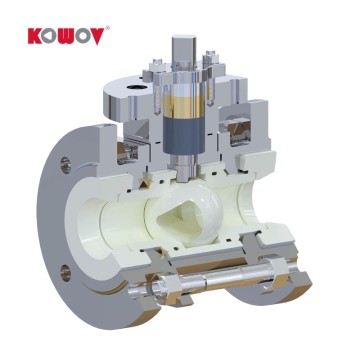
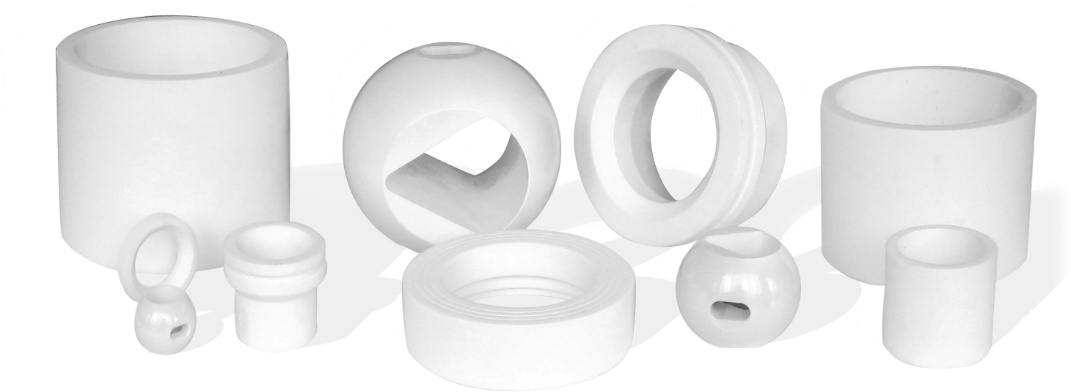
KOWOV manufactures the FCCV7 precision-control ceramic ball valve for low-flow regulation of corrosive, abrasive media in pharmaceutical and fertilizer plants. It uses a slotted ceramic ball; delivered data lists Cv below 10, and stem-material and flange-standard options are detailed below
- Pressure rating
- Up to Class 300
- Temperature range
- Up to 180 °C
Design and construction
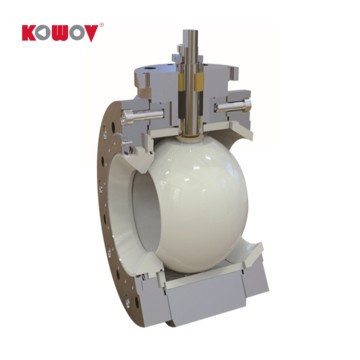
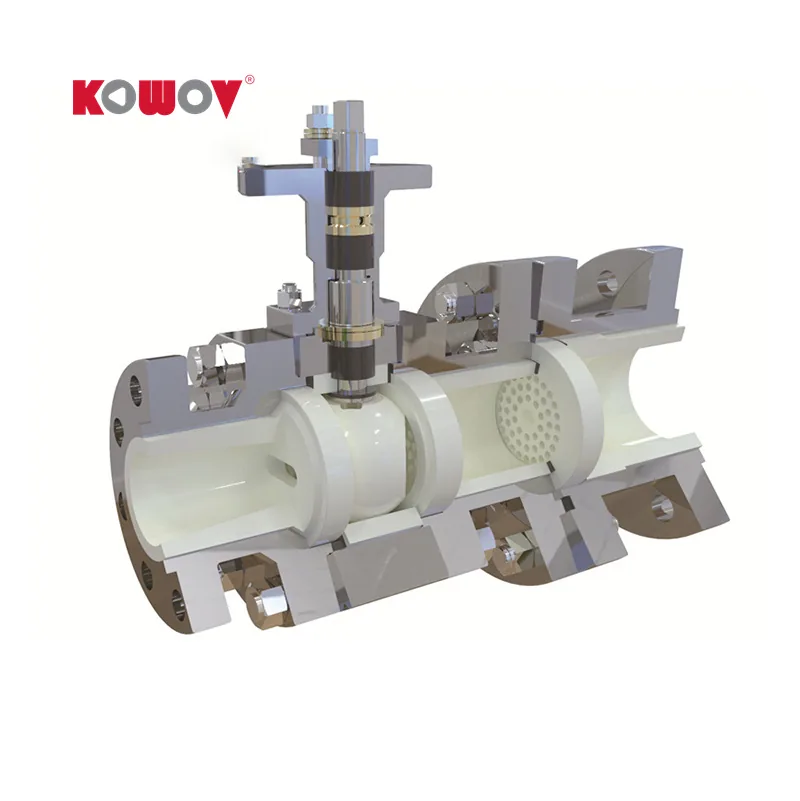
Tapered grooves on the ceramic ball core create flow regulation windows, providing extremely accurate control even at minimal flow levels
Coanda effect principle applied in the groove design prevents biased flow, reducing turbulence and erosion, while maintaining stable flow characteristics
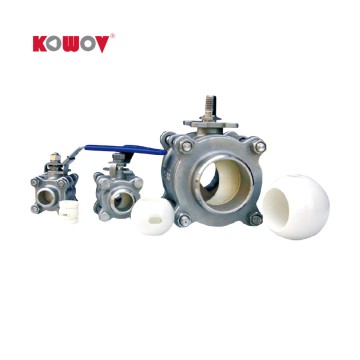
Solid ceramic ball core is stronger than conventional metal or composite ball designs, offering wear resistance in corrosive and erosive media
Slotted ball meters small flows for dosing and continuous operation
Customizable stem materials (316L stainless steel, Hastelloy, Monel, titanium, zirconium, etc.) adapt to different chemical environments for optimal corrosion resistance
Flanged connection design supports multiple standards (DIN, ANSI, API, JIS) for global applicability
Applications
Pharmaceutical industry: precise control of corrosive and abrasive additives
Fertilizer production: regulation of acidic or alkaline solutions in dosing processes
Specialty chemicals: accurate handling of corrosive slurries and fine chemical agents
Pneumatic conveying systems: precision transport of powders and additives under controlled flow
Technical data
| Item | Y-ZrO Y-TZP | Mg-ZrO₂ M-PSZ | 90 Al₂O₃ | 95 Al₂O₃ | 99 Al₂O₃ | Si₃N₄ | SiC | Common ceramics | Carbide alloy | 45# Steel |
|
Density g/cm³ |
6.0~6.05 | 5.72~5.74 | 3.45~3.55 | 3.6~3.75 | 3.9~3.95 | 3.2~3.33 | 3.15~3.25 | 3.0~3.5 | 14~18 | 7.8 |
|
Hardness HRA/C |
87 | 85 | 90 | 90 | 92 | 92 | 94 | 50~60 | 70 | 36 |
|
Flexural Strength MPa |
1150 | 900 | 350 | 370 | 450 | 1200 | 470 | 20~50 | 2000 | 804 |
|
Fracture Toughness (KIC) MPa√m |
10~12 | 13~15 | 3.4 | 3.6 | 4.5 | 7 | 4 | -- | 20 | 101 |
|
Compressive Strength MPa |
2000 | 1800 | 1700 | 2000 | 2200 | 2800 | -- | -- | 4000 | 2000 |
|
Thermal Shock Resistance °C |
87 | 110 | -- | -- | 50 | 200 | 75 | -- | 500 | 500 |
|
Thermal Expansion Coefficient ×10⁻⁶/°C |
9.6 | 10 | 7.6 | 7.8 | 8.3 | 3.4 | 4 | -- | 7 | 12 |
|
Modulus of Elasticity GPa |
200 | 200 | 310 | 330 | 350 | 300 | 400 | -- | 600 | -- |
|
Crushing Load KN (Φ6mm) |
15 | 10 | 3.5 | 3.6 | 4 | 18 | 3.5 | -- | -- | -- |
|
Using Temperature °C |
<160 | <1000 | <1200 | <1250 | <1500 | <1500 | <1500 | -- | -- | <560 |
|
Water Absorption |
0 | 0 | 0.02% | 0.01% | 0.00% | 0 | 0.50% | 5~10% | -- | -- |
|
Corrosion Prevention |
Good | Good | Good | Good | Good | Good | Good | Flooey | Good | Flooey |
| Media | Temperature | ZrO₂ | 99.9% Al₂O₃ | SiC | Si₃N₄ | Graphite | PTFE | Fluororubber | SS304 | SS316 | HC |
| 20% HCL | 60°C | A | A | A | B | A | A | A | C | C | B |
| 20% HCL | 95°C | A | A | A | C | A | A | A | -- | -- | C |
| 90% H₂SO₄ | 60°C | A | A | A | A | A | A | A | C | C | B |
| 90% H₂SO₄ | 95°C | A | A | A | B | A | A | A | C | C | C |
| 60% H₃PO₄ | 60°C | A | A | A | C | A | A | A | C | C | A |
| 60% H₃PO₄ | 95°C | A | A | A | C | A | A | A | C | C | A |
| 10% HF | 60°C | C | B | A | A | A | A | A | C | C | B |
| 46% HF | 95°C | C | C | A | C | A | A | A | -- | -- | C |
| 60% HNO₃ | 60°C | A | A | A | C | B | A | A | A | A | C |
| 60% HNO₃ | 95°C | A | B | A | C | B | A | A | B | B | C |
| 30% NaOH | 60°C | A | B | A | B | A | A | A | A | A | A |
| 30% NaOH | 95°C | B | B | A | C | A | A | A | A | B | A |
| Core Specifications | O-type ball core | V60° ball core | V45° ball core | V30° ball core |
| DN15 | 10 | 7 | 4 | 3 |
| DN20 | 18.2 | 12 | 8 | 5 |
| DN25 | 29 | 18 | 12 | 8 |
| DN32 | 47 | 30 | 20 | 13 |
| DN40 | 73 | 46 | 31 | 21 |
| DN50 | 114 | 72 | 48 | 32 |
| DN65 | 181 | 115 | 76 | 51 |
| DN80 | 292 | 185 | 123 | 82 |
| DN100 | 456 | 289 | 192 | 128 |
| DN125 | 712 | 452 | 300 | 201 |
| DN150 | 1025 | 650 | 432 | 289 |
| DN200 | 1822 | 1156 | 769 | 514 |
Application reading
Contact Us
Send the medium, temperature, pressure, nominal size, solids, actuation and current failure mode. The engineering team will review the duty before recommending a valve
Send an enquiry about FCCV7