Ceramic Valves for Waste Incineration Desulfurization
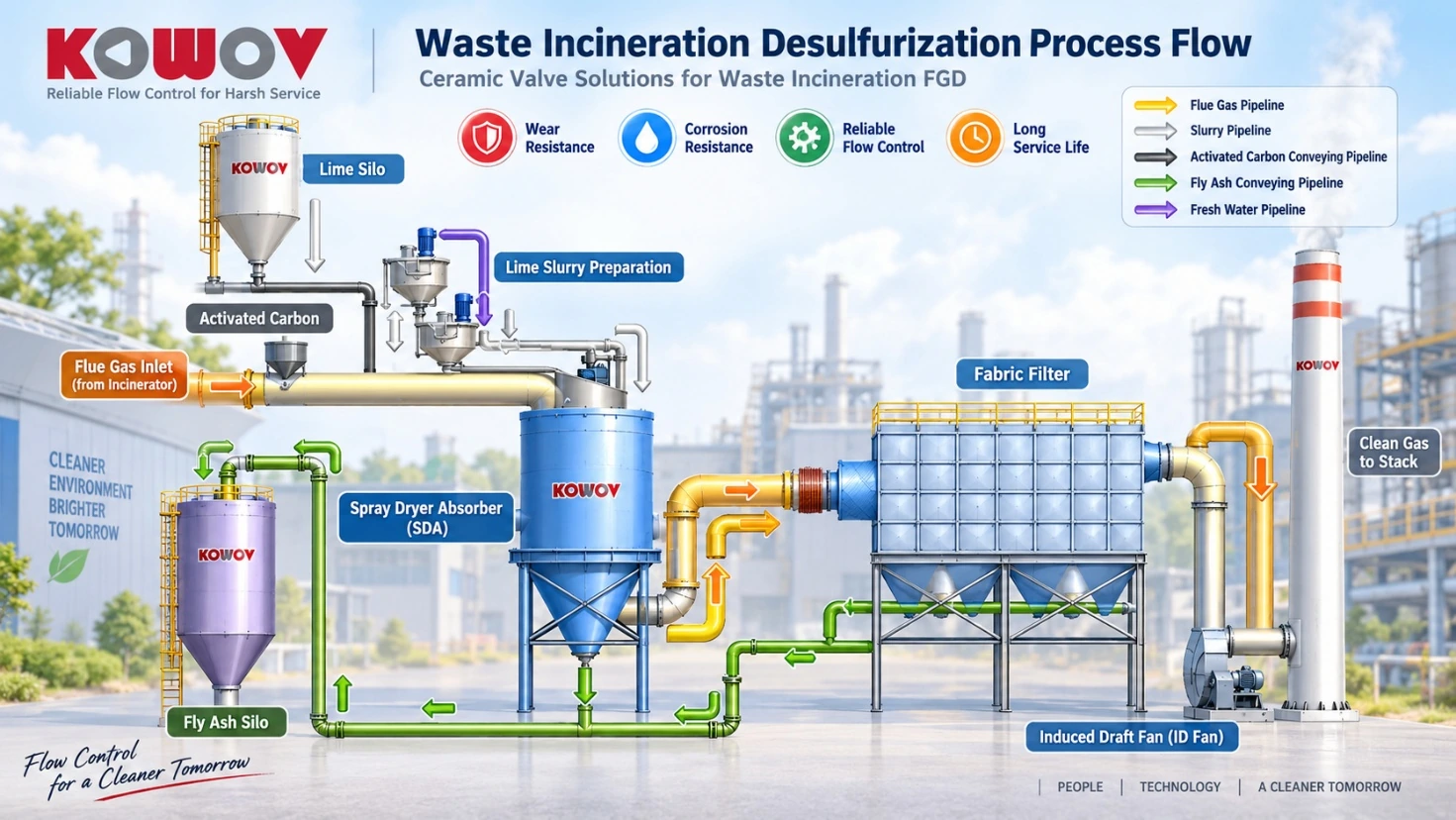
KOWOV ceramic valves are used in the desulfurization systems of waste incineration and waste-to-energy plants, where abrasive slurries and corrosive media challenge conventional valve performance. This application overview covers slurry control at reactors and atomizers, relevant operating conditions, and customer references for flue gas purification service
Flue Gas Treatment for Waste Incineration
Focus on Desulfurization
Operating Conditions
Unlike the conventional wet flue-gas desulfurization systems commonly used in coal-fired power plants, waste-incineration facilities may employ an atomized semi-dry desulfurization process. Ultrasonic atomization reduces the slurry droplet size from approximately 1,500-3,000 μm to 50-80 μm, producing a fine mist that significantly increases the gas-liquid contact area. This accelerates SO₂ absorption and improves desulfurization efficiency
However, high flow velocities and suspended solid particles intensify erosion and corrosion inside pipelines and valves, placing demanding requirements on valve materials, sealing performance, and service life
Operating Parameters
| Item | Value | Item | Value |
|---|---|---|---|
| Medium | Lime slurry / alkaline absorbent slurry | Phase | Solid-liquid two-phase flow |
| Operating Pressure | 6-16 bar | Nominal Pressure | PN16 / Class 150 |
| Differential Pressure | ≤6 bar | Nominal Diameter | DN25-DN200 |
| Operating Temperature | <100°C | Thermal Conditions | No significant thermal shock |
| Medium Characteristics | Corrosive and abrasive | Solids Content | Approximately 25% |
Medium Details
Lime slurry, chloride ions, fly ash, reaction products, and other suspended abrasive particles
Chemical Composition
Contains approximately 600 ppm chloride ions, creating a risk of electrochemical and localized corrosion
Solids Content
Approximately 25%, forming a high-solids solid-liquid two-phase flow
Particle Size
Approximately 10-100 μm. Fine particles intensify erosion of the valve internals and sealing surfaces
Unique Operating Challenges
Combined Erosion and Corrosion
High-velocity corrosive slurry containing suspended solids continuously impacts valve internals, damaging the protective oxide film and exposing the metal substrate. Mechanical erosion, chemical attack, and electrochemical corrosion act simultaneously, accelerating material loss and sealing-surface failure
Chloride-Induced Localized Corrosion
Dissolved chlorides and sulfates penetrate coating defects and attack the metal substrate. During shutdowns, evaporation and salt crystallization generate localized stresses, promoting pitting, cracking, blistering, and lining delamination. Repeated wet-dry cycling further accelerates this damage
Degradation of Non-Metallic Linings
Flue gas and slurry can cause rubber and resin linings to swell, soften, blister, crack, or delaminate through chemical degradation and media permeation. Once the lining is damaged, the underlying metal loses protection and corrodes rapidly
Acid Dew-Point Corrosion
Metal oxides in fly ash may promote the conversion of SO₂ to SO₃. When SO₃ combines with water vapor, sulfuric acid mist can form. If the operating temperature falls below the acid dew point, severe low-temperature corrosion may occur, especially in the presence of HCl and HF
More Severe Than Conventional Power-Plant FGD
Waste-incineration flue gas contains complex and highly variable components, including HCl, HF, SOₓ, fly ash, and heavy-metal salts. High dust loading, elevated moisture, chloride enrichment, and frequent wet-dry cycling make the operating environment more corrosive and abrasive than conventional coal-fired power-plant FGD service
Keywords: Waste Incineration, Semi-Dry Desulfurization, Lime Slurry Atomization, Chloride Corrosion, Abrasive Slurry, Wet-Dry Cycling, Acid Dew-Point Corrosion
Process Pain Points and Improvement Opportunities
Conventional Valve Materials and Types
Commonly used valves include globe valves, eccentric butterfly valves, and plug valves, typically manufactured from 316L stainless steel. More demanding services may require Hastelloy C-276, hard-seated plug valves, or ceramic-lined valves. However, conventional metal valves still experience rapid deterioration in highly abrasive and chloride-rich slurry service
Problems with Conventional Valves
Lime slurry contains highly abrasive suspended solids, while chloride-rich condensate creates a strongly corrosive environment. Their combined action causes erosion, localized corrosion, sealing-surface damage, internal leakage, and increased operating torque
Short Replacement Cycles
Based on typical field experience, conventional control valves may require replacement after approximately 6-10 months, while on-off valves may last only 12-30 months, depending on the valve position and operating severity
Losses Caused by Shutdown Maintenance
- Reduced incinerator load or bypass operation lowers flue-gas treatment capacity and increases environmental compliance risks
- Emergency maintenance, cleaning, temporary piping, and spare-parts replacement increase operating costs
- Repeated flushing increases water, electricity, and chemical consumption
- Frequent shutdowns and restarts accelerate thermal cycling and shorten equipment life
- Reduced treatment capacity can restrict waste throughput and result in lost operating revenue
Industry Pain Points and Improvement Opportunities
Waste-incineration desulfurization imposes much higher requirements for corrosion resistance, erosion resistance, sealing reliability, and control accuracy than conventional power-plant FGD. Frequent valve failures have become a major obstacle to continuous and stable system operation, creating strong demand for improved valve materials and designs
Keywords: High Lifecycle Cost, Short Service Life, Frequent Maintenance, Environmental Compliance Risk, High Water and Chemical Consumption, Restricted Waste-Treatment Capacity
Why Choose Ceramic Valves?
Superior Abrasion and Erosion Resistance
- Structural ceramics with hardness above HRA90 provide excellent resistance to abrasive slurry and high-velocity particle erosion
- Their chemically stable, low-adhesion surfaces reduce particle buildup, galling, and surface fatigue
Superior Corrosion Resistance
- Structural ceramics resist acids, alkalis, salts, and complex process liquids, greatly reducing chemical attack and pitting
- Unlike metals, ceramics are not susceptible to electrochemical corrosion and offer excellent resistance to chloride-induced damage
All-Ceramic Trim Design
- A smooth, dead-zone-free flow path reduces particle accumulation and valve blockage
- The ceramic ball and seats maintain stable sealing geometry after prolonged erosion, providing reliable tight shutoff
- Specially designed ceramic trim can provide equal-percentage or quick-opening flow characteristics for slurry control applications
Extended Service Life
- Typical Reference Service Life: Control Valves: ≥3 Years
- On-Off Valves: ≥7 Years
Longer service life reduces replacement frequency, unplanned downtime, spare-parts consumption, and overall lifecycle costs
Conclusion
Ceramic slurry valves address the combined challenges of corrosion, abrasion, erosion, and particle scouring. They have been successfully applied in waste-incineration flue-gas desulfurization systems, particularly in lime-slurry circulation and atomization-related pipelines, improving sealing reliability, service life, and plant availability
End Users
- Yangzhou Domestic Waste Incineration Power Plant, China, since 2010
- Kelin Environmental Resources (Suzhou) Co., Ltd., China, since 2021
- Dongguan Jinghuan Environmental Protection Power Plant, China, since 2011
- Tianjin Teda Environmental Protection Power Plant, China, since 2012
In the harsh working conditions of waste incineration desulfurization, the project initially selected imported single-seat valves, double-seat valves, and plug valves from renowned European and American brands. However, the limestone slurry is highly abrasive, and the high chloride ion flue gas and its condensate are highly corrosive. These factors cause severe internal and external corrosion and erosion of the valve, especially in the sealing surface, resulting in most metal valves failing after only 2-3 months of use, and some even failing within half a year
KOWOV ceramic valves have been operating stably in the desulfurization system of Huaibei Waste Incineration Power Plant for more than 5 years, fully demonstrating the excellent performance of ceramic valves in resisting corrosion, wear, and high-speed scouring. They have been successfully applied in key control positions such as reactors and atomizers, becoming the optimal choice for such working conditions
Conclusion: Actual Service Life
- Control Valves: 5 years
- On-Off Valves: ≥8 years
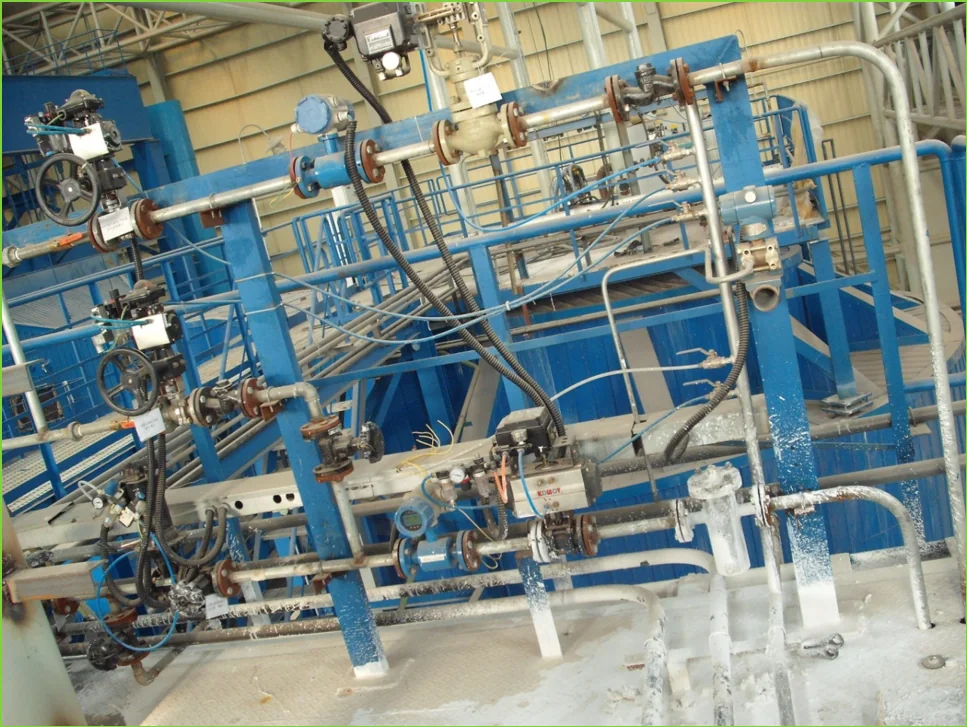
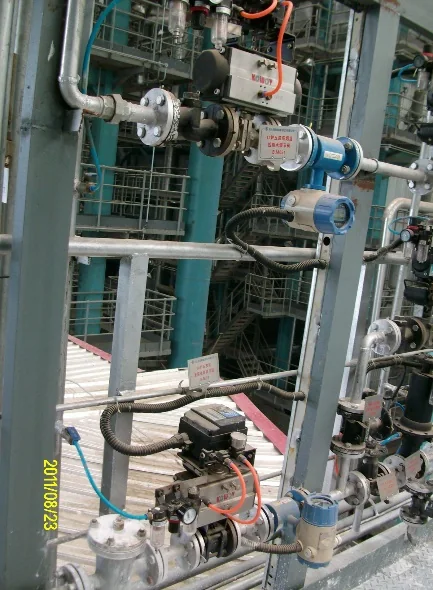
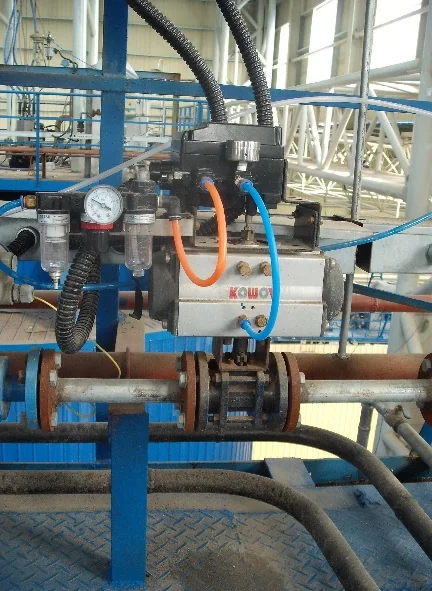
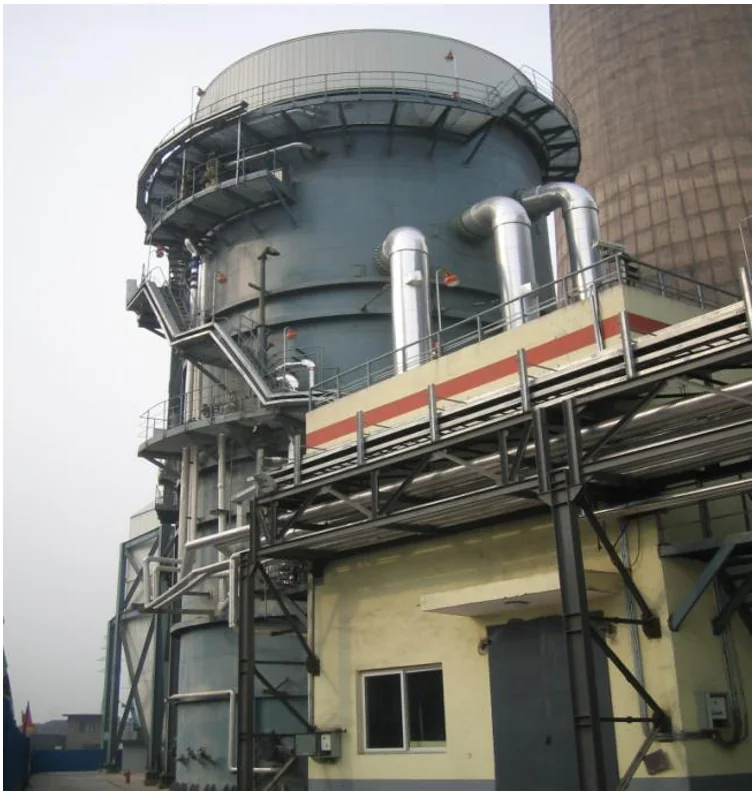
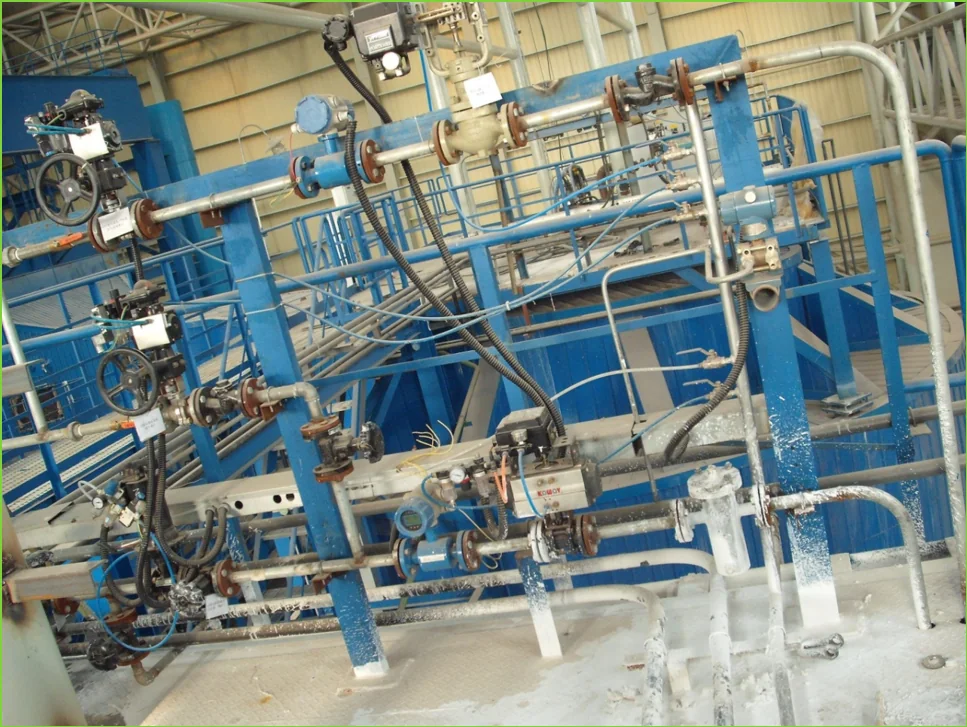
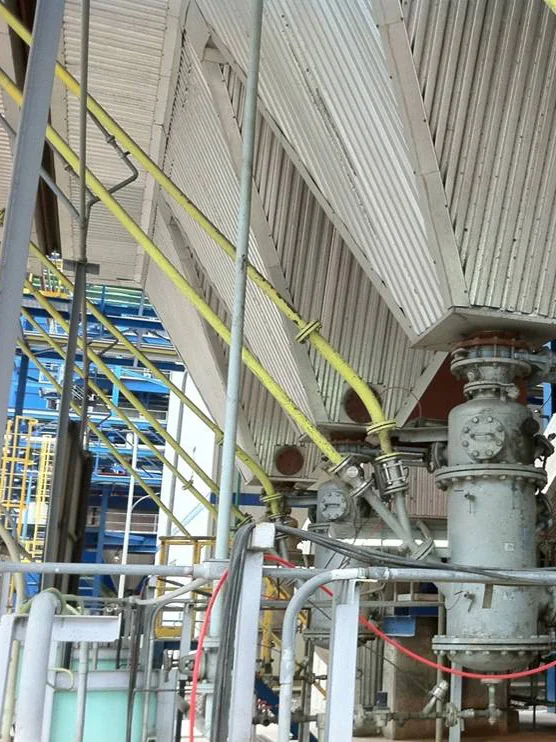
Waste Incineration Desulfurization: site photographs
Commonly Used Products
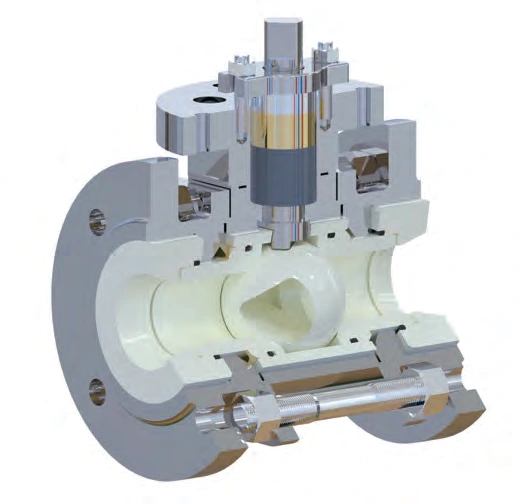
FCCV1
Standard Ceramic Ball Valve
A bidirectional ceramic ball-valve architecture for on-off duties where abrasion, corrosion or deposits affect the sealing path
View FCCV1
ELCV
Economical Ceramic Ball Valve
A compact ceramic ball-valve option for duties that need ceramic sealing surfaces without the architecture of the higher-severity FCCV families
View ELCV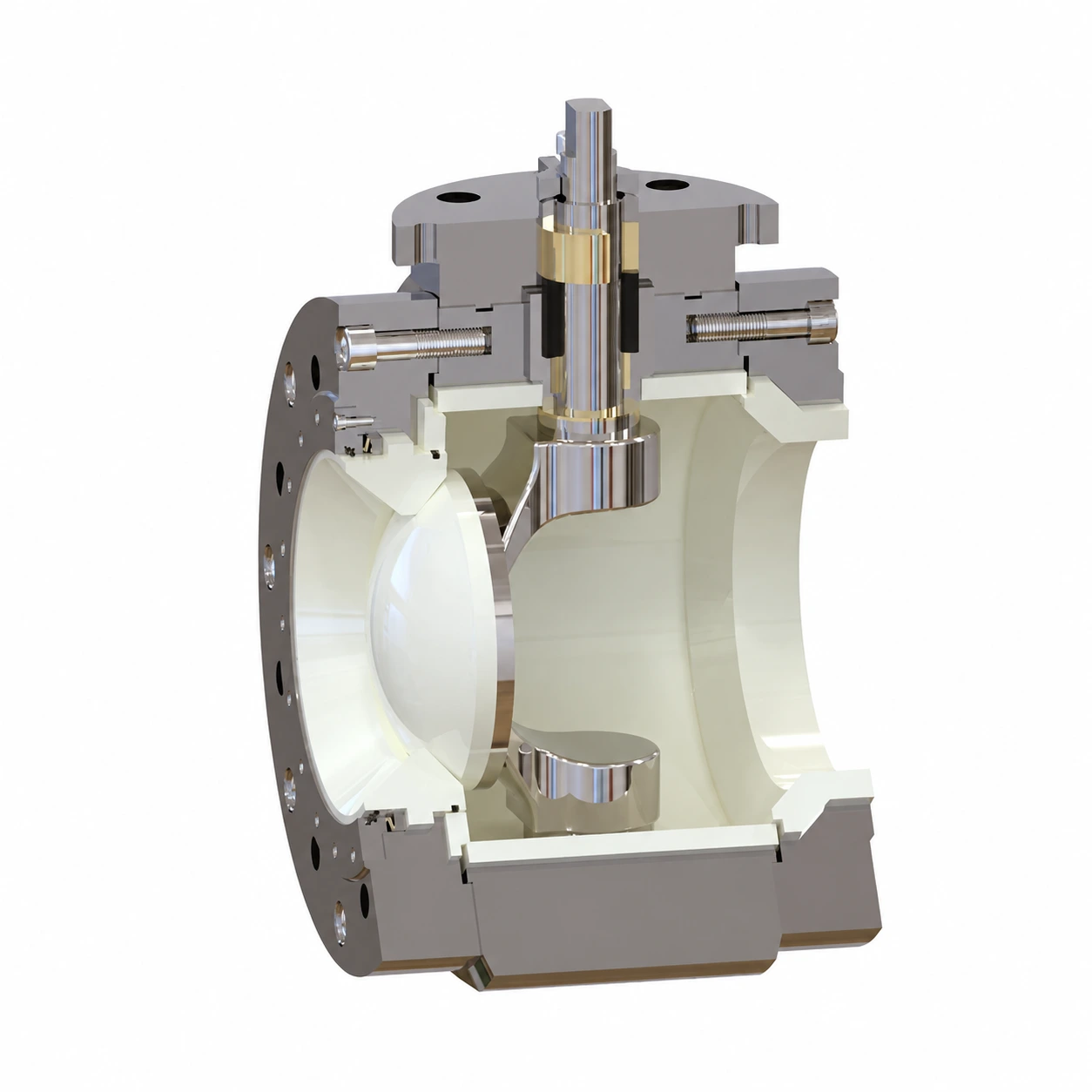
FCRV
Ceramic C Rotary Valve
A rotary C-segment flow path for regulation, shearing deposits and handling viscous or particle-bearing media
View FCRVContact Us
Talk to our team about your waste incineration desulfurization application
Discuss your application